Blog

  • When Your Blog Isn’t Getting Reads (And Why Checking Stats Won’t Help)

    When You Care About Your Projects, But Your Work Often Meets Silence

    Let me tell you something. Something I’ve brushed up against, felt doubt creeping into my thoughts, and wanting to slam my keyboard into the nearest wall.

    I hate writing.

    I hate writing because I always check my emails, my blog and Ko-fi stats like a tweaker, convinced that the numbers will change from 0 to 1 if I keep opening the apps every 2 seconds.

    Human or Bot? When Signals Aren’t Clear Cut

    It gets worse whenever you can’t tell the difference between a human dropping in or a bot doing its job.

    That ambiguity is poison for my spiral, because I can’t tell if my work is being seen or if it’s just the digital equivalent of a tumbleweed rolling past.

    That’s why I try to leave tiny signals—like my little wave buttons.

    A click isn’t required; it’s optional, and it’s a subtle way for a human to say, “I saw you. I’m here. I get it.”

    It’s a breadcrumb for both you and me.

    For me, it’s proof that someone—anyone—could be reading, reacting, thinking, or feeling along with me. For the reader, it’s permission to exist quietly without having to shout “like” or “share.”

    Even if no one ever clicks those buttons, the act of putting them there matters. It’s a reminder that connection doesn’t always need validation, and that my work, my voice, my little archive of thoughts—it can exist, quietly, for the people who stumble across it.

    When Reality is Messy, And So is The Internet

    Maybe today it’s zero views. Maybe tomorrow someone reads the whole post without a single click.

    That’s okay. The signal is still there.

    And when they don’t?

    Well… I stew.

    I spiral.

    I ask myself why I even bother. Who am I even writing for if the silence is deafening?

    Here’s the thing: silence doesn’t mean your work is worthless.

    It doesn’t mean no one will ever see it.

    It just means that the internet is messy, chaotic, and way too big for anyone to stumble across your little corner right away.

    I know this from first-hand experience.

    When You Write to Fit In, You Lose Your Will to Create

    When I started writing on WordPress/Jetpack, I relied on WordPress Reader and their daily prompts to get people to check out my blog.

    After a few months of writing to answer someone else’s questions, I felt as though I wasn’t writing authentically for myself and made the decision to ignore the daily prompts and write about the things I wanted to write about instead.

    Sure, I lost a lot of views, visits, and likes by making this choice to move away from Reader.

    However, despite my blog being quiet most of the time or found by the few people who were curious enough to read my works anyways—even though I’m not a guru, I’m not an expert, I’m not a professional writer, I don’t provide listicles, and I don’t write motivational or positivity pornI chose my own poison of creativity instead of someone else’s.

    That’s Why I Keep Writing Anyways.

    Not because I’m going to blow up overnight, not because I’m chasing clout, and definitely not because I think anyone needs my words.

    I write because if I don’t, I rot a little on the inside.

    I write because I need a record of me trying.

    Me experimenting.

    Me surviving.

    Sometimes the numbers do tick up. Sometimes someone reads a post months later and clicks “like” or downloads a PDF. Most of the time, nothing happens. And that’s fine. The work exists anyway. I exist anyway.

    If you care too much about your stats, your audience, your numbers—you’re going to hurt yourself. Stop checking every hour. Stop thinking your work’s value is measured by the tiny numbers in a corner of a screen.

    Write. Experiment. Fail. Reflect. Repeat. Keep your corner of the internet messy and alive, because eventually—even if no one notices—it’s a little bit of proof that you were here, trying, and refusing to be erased by silence.


    If You Made It to the End

    Thanks for reading all the way through. I support this work myself, but if you found these words meaningful or just wanted to let me know a human was here, you can tap the tiny wave button below.

    It’s completely optional, no pressure—it just lets me know someone saw the work and understood, even a little, the weight of trying to create while the world often stays quiet.

    Even a like, share, and subscribe tells me a person found value here too.


    Explore The Archives Below

    I’ve written more about this uncomfortable feeling because I believe that it doesn’t completely leave you alone, no matter where you are in life.

    Not when your work is quiet, and not when you suddenly “make it.” It morphs into something that makes you sit and doubt yourself, no matter what you do, but it also keeps you on your toes.

    If you have a break, below are related articles to check out and my homepage to see what else the Archives has to offer.
  • My Personal Experiment with Primal Queen: My 4-Month Update

    Disclaimer: I’m Not a Medical Professional — Just Sharing My Experience

    I’ve been taking Primal Queen for about 4 months now. As I mentioned in my previous posts, this is not a silver bullet, I’m not a medical professional, and I’m not using this supplement as a replacement for sleep, nutrition, or exercise. Life has been chaotic, and my routine is… well, let’s just say “imperfect”:

    I don’t always sleep enough or consistently.

    I stay up late far too often.

    I love sweets more than I love vegetables.

    I work out 2–3 times a week while juggling two jobs.

    My energy levels, mood, and days off are all over the place.

    Basically, I’m not exactly a poster child for “ideal supplement results.”

    And that’s okay.

    Why I Started Taking Primal Queen

    The primary reason I started taking it — aside from my Ma’s recommendation — was for my menstrual cycles.

    I wanted something that might help regulate them, reduce bloating, and make my cramps more manageable.

    No illusions here: I wasn’t expecting to suddenly climb walls like Toby McGuire’s Spider-Man (I still have my astigmatism with 19/19 vision and slightly bent glasses, and I still struggle to lift heavy awkward freight at work without feeling winded).

    But I figured, maybe it could help me function a little better during my cycle, which is already a huge quality-of-life improvement.

    What’s Changed After 4 Months

    Here’s what I’ve noticed since starting Primal Queen:

    • Cycle consistency: My period now lasts 5 days every time, with roughly 21-day gaps between cycles.
    • Bloating: Reduced significantly — I’m not waddling around like a balloon by day 2 anymore.
    • Cramps: Down to a 1–2 on the pain scale, manageable enough that I can still go about my day.
    • Flow: Less heavy, no worrying about leaks — practical wins for real life.
    • Mood: Irritable when I have to do things I don’t want to do, but I’d be lying if I said I wasn’t always a little irritable anyway.

    Even on days when I haven’t eaten enough, slept enough, or exercised, which is often, I can still notice these improvements.

    That’s the biggest surprise. It doesn’t magically fix everything, but it gives my body a little more support to handle the chaos.

    What Hasn’t Changed

    I’m still working two jobs, working long shifts, sweating in Hawaii heat while wearing pants and a pullover because I’m a psychopath.

    My strength and stamina are still a far cry from superhero threat levels.

    My eyesight is the same — sadly, no Marvel-level upgrade here.

    But that’s okay.

    I didn’t start this expecting Spider-Man improvements. I started it to take care of myself in one tiny, practical way, and that’s exactly what it’s doing.

    Key Takeaways

    1. Supplements aren’t magic — your daily habits, stress, sleep, and diet still matter.

    2. Even with imperfect routines, small improvements can make a big difference.

    3. Tracking your results (even humorously, like my Spider-Man comparisons) helps you notice subtle wins.

    4. Consistency matters more than perfection — taking it “mostly every day” is enough to see changes.

    Optional Reflection

    • What small improvements in your routine have made the biggest difference for you?
    • Have you tried supplements in a chaotic life?
    • What results actually mattered?
    • How do you measure your “wins” when your life is messy?

    If You Made It to the End

    Hey, thanks for sticking with me all the way through! I put this work out there for myself, but it means a lot when someone actually reads it.

    If you’d like to show you were here and get what I mean about juggling life, cycles, and experiments, tap the Tiny Wave button below.

    No pressure at all — supporting the Archives is completely optional. Even a small click tells me a real person stopped by and that these reflections land with someone.

    If not, feel free to like, subscribe, or share this post if it resonates with you or reminded you of someone doing a similar personal experiment.


    Check Out My Other Primal Queen Posts


    Explore The Archives Here

    The best place to start anything is from the beginning. Below you can check out my start here page, explore whichever articles peak your curiosities—from personal finances on a low income, personal strength training without a gym, video games and the lessons they unexpectedly provide, or thought experiments—feel free to see what exists below.

  • Navigating Financial Struggles and Guilt: When You Want to Help Your Family but Can’t Afford To

    The Guilt of Wanting to Help Family When You’re Financially Strapped

    I went home to visit my family for a day, and nothing really changed: same property, same house, my Ma, grandma, and uncle were there, and my two dogs were ecstatic to see me after nearly a year of living on my own. But time shows the truth—the guest house I grew up in on my grandma’s property is showing its age.

    The wooden stairs have rotted; the middle step caved in. The patio connecting the guest house and main house floods slightly after the recent rains. Even my parents’ bathroom had needed repairs my dad handled himself. Gnats buzzed around incessantly—more than usual—landing on my face, buzzing near my ears.

    While helping Ma with some simple math problems, she overshot an answer from $1,200 to $12,000. I told her that if I had $12,000, I would help fix the place up. Like always, Ma shook her head and said, “Don’t worry about the house.”

    I hate it whenever my parents push against me when I talk about not earning enough. I understand the sentiment—they want me to be grateful I’m working, that I’m earning—but I hate that I can’t help more financially because I need to take care of myself first. I’m not broke enough to need help anymore. But I’m too broke to help my family. And it kills me inside.

    When Advice Says to Earn More, But You’re Capped

    I’ve heard the same advice over and over: earn more money, and you’ll be able to help. Yeah, no kidding, Sherlock. That doesn’t make it any easier.

    I was born and raised in Hawaii, one of the most isolated and expensive states in the US.


    Paradise isn’t free. It’s only paradise if you can pay for it. If you can’t, it’s just a place that slowly crushes you under the cost of living.


    Jobs that pay enough to live comfortably are limited to tourism, hospitality, medical, and other customer-facing roles.

    A statistic from years ago said that to live comfortably in the 808, a household needs to earn over $132,000 annually.

    Meanwhile, I make under $40,000 per year, juggling a warehouse job and a part-time role, while carrying roughly $10,000 in personal debt.

    Even when I find ways to make things work for myself, the financial gap to help my family feels impossible.

    What Do You Do When You See Family Struggling?

    This is a hard truth I’ve had to accept:

    I don’t help.

    At least not in any substantial financial way like I used to.

    Occasionally, I’ll see if I have leftover cash to buy lunch or dinner for my parents when we have the same day off, but repairs? Major bills? I can’t do that.

    A few years ago, before I moved out, Ma asked me for help financially. At the time, I only had a car loan and a few credit cards. She needed money. I didn’t ask what it was for. I took out a few personal loans that accrued to roughly $30,000 over the years—bigger ones Ma handled, smaller ones I paid.

    Those loans are long paid off, but the emotional and financial toll left a scar. It reinforced how much we were scraping by just to make sure basic living conditions were met.

    And all because the only resources available to us, when paychecks were already stretched thin, were loans.

    When Family Says to Help Yourself First

    Ma always tells me: “Don’t worry about the house.” She and Dad will figure things out, even if it takes time. Sure, on paper, their combined income is over $100K, but the reality—the repairs, the small, unseen struggles—says otherwise.

    I used to give them money to cover repairs, but now, Ma tells me to focus on paying off my current debts. Without loan payments draining my wallet, I can rebuild my emergency fund, invest more into my Roth IRA, and eventually help my family—not because I have no choice, but because I want to.

    Choosing Not to Help Is Still a Form of Care

    As frustrating as it is, as much as it feels like abandoning your family, not helping when you’re drowning is still a form of care.

    I learned this the hard way after taking on loans years ago to cover immediate needs. The emotional and financial toll made me feel like I was running with cinderblocks cemented to my feet. I was going nowhere, except down.

    When the time comes that I’m debt-free—maybe not earning everything I’d like—I can give support from a place of stability. I can help because I choose to, not because I have no other option. And that matters.

    Final Thoughts

    This isn’t easy. The guilt of wanting to help while being financially constrained never fully disappears. But being honest with yourself about what you can handle is an act of care, not cowardice.

    You can still love your family, support them in small ways, and plan for the future—without sacrificing your own stability.

    Like Hawaiian Airlines says during their demonstrations before take off—put your mask on first before helping someone else with theirs.


    If You Made It to the End

    Hey—you made it! Thank you for sticking with me through this post. I share these reflections because I believe in being honest about the struggles we all face, and I support the Archives myself so that it stays available.

    If this resonated with you, or if you get what it’s like to want to help others but need to take care of yourself first, you can click the tiny wave button below. It’s completely optional, but it’s a nice way to let me know a real person visited and spent some time here.

    Either way, I’m grateful you were here and took the time to read.


    Explore The Financial Archives Below

    Explore The Archives Here

    The Stratagem’s Archive: Start Here

  • Before You Celebrate Your First 100 Downloads, Read This

    I thought my writing was finally reaching people. My metrics told a different story.

    I’ve been writing on WordPress for about 8 months now — still a baby writer — and in that time I’ve published 7 PDFs.

    Five of them were personal reflections. Two were fitness-related, based on how I personally trained over 280+ weeks.

    Over the last 7 months, I watched my total PDF download count steadily climb to nearly 190.

    As a new writer, I was shocked.

    I’ve never thought anything I’ve made actually resonated with other people online — so seeing those numbers go up month after month felt like proof that maybe my work was finally landing somewhere.

    I let myself feel hopeful.

    I thought:
    “People are choosing to download this.”

    There was just one problem.

    While my PDFs were being downloaded consistently, my blog views, visitors, likes, shares, and subscribers weren’t following the same trajectory.

    If nearly 200 people downloaded my work, why wasn’t anything else moving?

    • No increase in followers.
    • No comments.
    • No returning visitors.
    • No meaningful time spent on the blog itself.

    Just… downloads.

    At first, I told myself that maybe the people downloading my PDFs were just hard to track.

    Maybe they were using private browsers.
    Maybe they were in incognito mode.
    Maybe they were behind VPNs.
    Maybe they opened the PDF offline after downloading it.

    In my head, these were real people — just statistically invisible ones.

    But over time, I learned something I didn’t expect as a new creator:

    Downloads don’t always mean readers.

    Bots crawl websites constantly. They scan pages, follow links, and yes — they can download files like PDFs. Sometimes it’s for indexing. Sometimes it’s for scraping content. Sometimes it’s automated vulnerability checks.

    And they don’t just stop at your blog.

    I noticed that even my Ko-fi page — where I keep my other creative work like sticker designs, D&D story expansions, and concept art — had a few external views that I couldn’t account for.

    Before, I assumed those were curious people checking out my work.

    Now, I’m not so sure.

    Coming to this realization forced me to separate what the numbers were showing me from the story I wanted them to mean.

    So now, when I check my stats, I try to keep a few things in mind:

    • A download is not the same as a read.
    • Traffic is not the same as engagement.
    • And early growth isn’t always human.

    Despite everything that’s happened, my stubbornness would let me pause for a moment, then have me keep publishing. Even when engagement and views are quiet.

    Since I don’t have advanced analytical tools for my blog, I, The Archivist, will never know for sure if anything happened on my blog was due to a person or a bot.


    If you’re a new writer watching your download count rise faster than anything else — celebrate carefully.

    Make sure your reality isn’t running ahead of your assumptions.

    That doesn’t mean your work doesn’t matter.

    It means that when you’re starting out, your metrics can’t be your only source of truth.

    If you’re early in your writing or creative work and your numbers don’t seem to match — don’t immediately assume you’ve failed, and don’t immediately assume you’ve “made it” either.

    Look for signals that are harder to fake:

    Someone spending time on your page.
    Someone clicking through to another post.
    Someone subscribing.
    Someone replying, sharing, or bookmarking your work.

    Even one real person choosing to stay is more meaningful than 50 automated downloads that never read a word.

    I’m still new at this. I’m still figuring out what real engagement looks like.

    But I’d rather build something slowly with honest signals than rush to celebrate numbers I don’t fully understand.

    If you’re building too — keep going.

    Just make sure you know what you’re actually measuring.


    Explore The Archives:

    Here are a few articles about other things I’ve written over time:


    If You Made It to The End

    I support this work myself. If you found value in it and want to help keep it available, optional support is here 🌊.
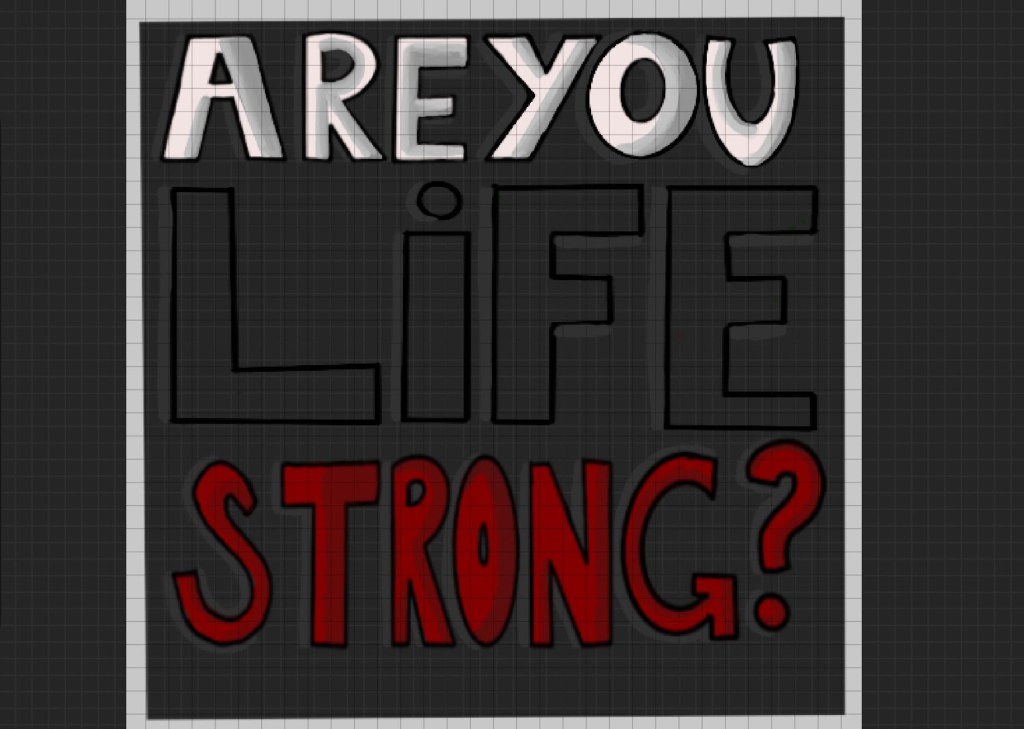
    I’m making a sticker design based on my Chaotic Life Strong PDFs. This is what the draft looks like as of right now.

    My Chaotic Life Strong inspired sticker draft

    If you’re curious to see what the end result will look like and would like to have a copy, check out my Ko-fi page by waving below. It’s my secondary creative archive.

    No pressure—just a way for me to say thank you for spending time with The Archives.

    Otherwise, I’ll see you all later in The Archives.

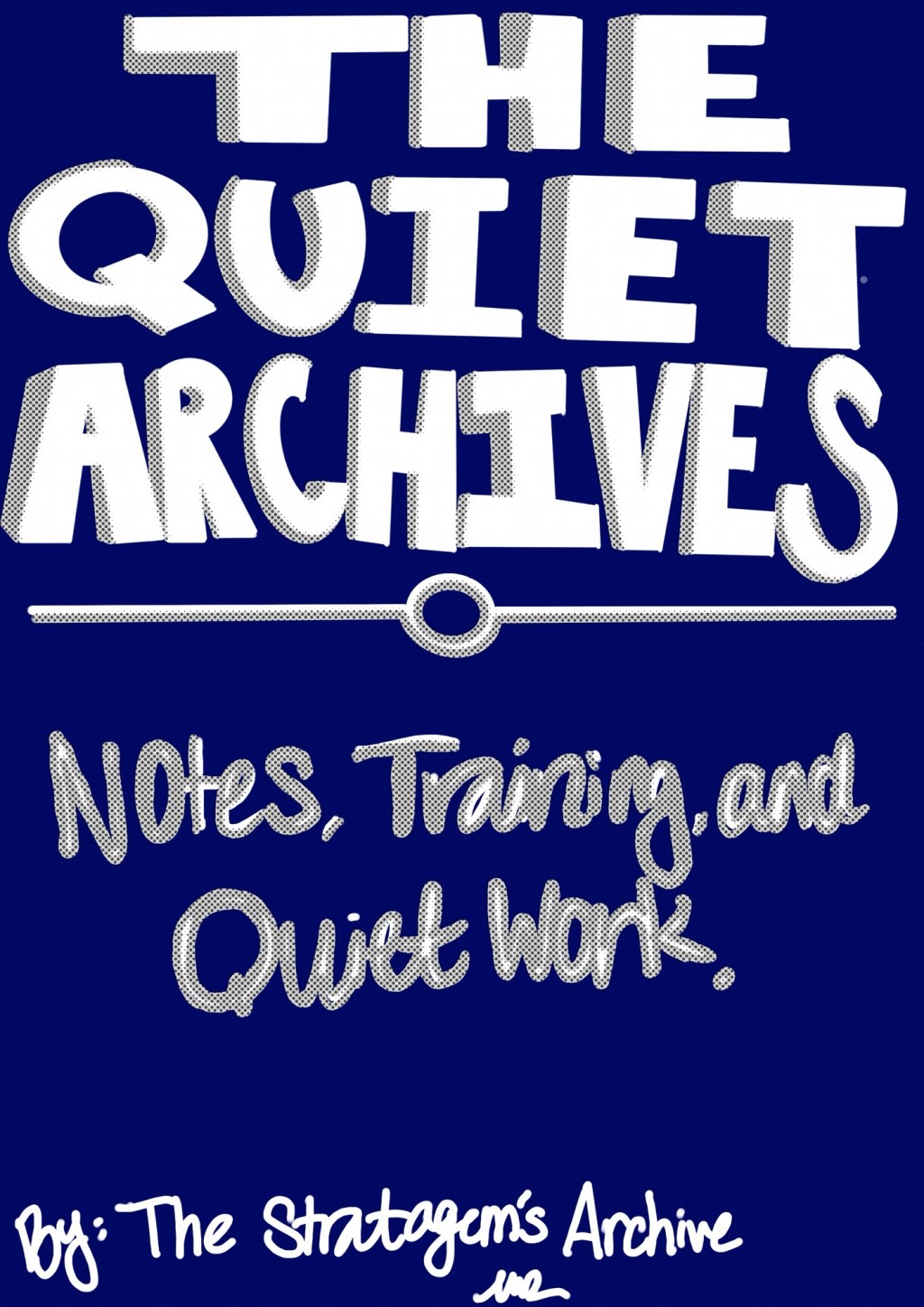
  • Introducing “The Quiet Archives”: A Reflection PDF

    Introducing “The Quiet Archives”: A Reflection PDF

    A Way to Say “Hi” Without Saying It

    Some days, I wonder how to say hi without anyone having to say it back. How to share a quiet moment with someone, even if it’s just in passing.

    That’s what led me to create The Quiet Archives, a small PDF of reflections and thoughts I’ve been gathering across my other PDFs.

    It’s not a manifesto, not a guide, not advice — just me putting words down and offering them quietly to anyone who might resonate.

    It’s six pages long, hand-crafted in tone and pacing, meant to be read slowly, like leaving a note for someone who might stumble upon it.

    Inside, I share reflections on endurance, self-kindness, grief, and the tiny steps I’ve tried taking to care for myself in the midst of everything life keeps throwing.

    If you’re curious, you can find The Quiet Archives here and it is yours to read.

    There’s no obligation; it’s just a way to share a quiet space with anyone who might want it.

    Sometimes, a simple hello doesn’t need a direct response. This is just my version of saying hi without having to say it.


    If anything inside The Quiet Archives, and previous PDFs, resonated with you, gave you something to think about, or allowed you to see things from a different perspective, click the Tiny Wave button below.

    I support this work myself. If you found value in it and want to help keep it available, optional support is here 🌊.

  • How I’m Paying Down Debt While Working Two Jobs on a $40K Salary

    How I’m Paying Off a 0% APR Loan Before It Jumps to 30% Interest

    If you’re trying to pay off credit cards or personal loans while earning around $40,000 a year, it can feel like every financial decision is just choosing the least painful option.

    Over the past 7 months, I’ve paid down roughly $6,000 of my personal debt while working a full-time and part-time job on a low income. I’m still in debt—but seeing that number drop has changed how much pressure I feel around money.


    It’s taken me a very long time— as long as The Stratagem’s Archives has been around—but I’ve finally managed to drop my $17,000+ personal debt down to roughly $11,000+. 

    Do you have any idea how much of a relief it is to have that number drop?! I knew that I felt my body was constantly bracing, but I didn’t realize how wound up I was until I let some tension go.

    That’s $6,000 eradicated and the money I used for this debt can be used towards my remaining balances.

    Of course, my material situation hasn’t changed too much:

    • I’m still carrying debt 
    • I’m still earning roughly $40,000/annually with a full-time and a part-time job
    • Rent, necessities, and other expenses still exist

    However, the fact that I’ve been making incremental progress on my low salary, to be able to chunk off so much money from my overall debts, is monumental for me.

    I felt my anxiety, my anger, my resentment almost melt away—enough where my chest wasn’t trying to crush my rib cage with every exhale.

    They’re not completely gone—I still feel anxious, I still hate my situation, I resent past-me for not having as many financial options as present-me does—but it’s enough where I’m not constantly holding my breath.

    I HATE debt; I hate the fact that I owe someone else money because I didn’t have the cash on hand at the time something came up. I hate how I can’t save, invest, or use my money the way I want to, but I’ve always prioritized automatically saving and investing anyways.

    This—seeing how far I’ve gotten from point A to now—gives me a faint glimmer of hope that I’ll be able to get out of debt after all.

    The Debt Lesson I Learned After Years of Using Personal Loans

    I was reliving the same money lesson over and over, spending years stuck in revolving debt.

    It wasn’t just credit cards I had to deal with either. I had to factor in for the personal loans that I took out because I needed money THEN, that present-me is paying for NOW.

    When you earn as much as I do, you don’t have a lot of options when it comes to financial kindness. 

    Not being financially generous—rather being kinder to ourselves. When you’ve weighed every financial option you had at the time, you realize that you had to pick the less painful option.

    Not the most good option; the least painful.

    Why I’m Avoiding Personal Loans Going Forward

    I decided that, before and after my debts are gone, I’ll never take out a personal loan again, if I can help it, just because I lack the money now.

    Keeping as much of my money for myself gives me more agency—both in how I use my money and how I use my time.

    Not just working to pay off debt, but giving myself a chance to imagine life past survival mode.

    If I managed to slog my way out of $6,000, then I’ll be able to slog my way into saving at least $1,000-$1,500 into my emergency funds.

    I used to have almost $20,000 in my emergency fund at one point in my life. 

    However, I made the best decision at the time a few years ago to use around $15,000 to pay towards my $35,000 car loan. 

    It was a smart decision at the time, until a real emergency came up. A Ford truck T-boned my car on my way home from work that my car was unsalvageable.

    I had more expenses piling up than I could pay off and everyday felt like a noose was wrapping tighter around my neck.

    Aren’t You Using The IWT’s Conscious Spending Plan?

    Yes, I am using Ramit Sethi’s CSP from I Will Teach You to be Rich, but in my other blog post, Where Do Frameworks and Tools End and Our Thinking Begin?, I explicitly said that I’ve taken that framework and made it my own.

    Instead of having 4 numbers to track, I keep track of 3: expenses, savings, and investing.

    Guilt-free spending doesn’t exist for me right now because, with my debts, everything falls into my expenses category. 

    I use credit cards to pay for everything. 

    I prioritize ensuring my balances are paid off within my next weekly paycheck. Or at least paid off before my credit card’s closing date to avoid interest being adding on.

    Being debt free is more important to me than spending money on things I would feel guilty spending on.

    My life feels heavier without a small reward every now and again.

    However, this was a choice I made because I would rather suffer in the short-term than prolong my debts.

    Money, or rather my lack of it, was constantly stressing me out. However, I think that I’ll finally be able to have enough money to go somewhere with a deep bathtub and soak in hot water to congratulate myself on taking care of my debts.

    That will be the day where I can experience using my money guilt-free.

    If You Made It to The End

    If this post made you feel seen, or if you recognized your own situation here, you’re welcome to quietly nod along.

    You don’t have to explain yourself—your presence matters.

    If you feel up to it, you can like, share, or subscribe to the Archives. Someone might benefit from hearing about tackling personal debt from someone still working on it themselves, rather than from someone without debt.

    No pressure—just thanks for spending a few minutes with these words. If you’d like to say thanks without words, tap this little button below:

    Money Related Posts

  • Fitness For Chaotic Human Lives: How to Get Strong When Life is Chaotic

    If you’ve tried to stay consistent but keep feeling like you’re “starting over” because your work schedule, energy levels, or life responsibilities keep shifting — this PDF is for you.

    Why This ISN’T Your Typical Workout PDF

    This isn’t another workout PDF.

    There are exercises inside it, but they aren’t instructions or prescriptions.

    This is a 5 page reflection, including a reflective questionnaire, on how I’ve trained across changing jobs, energy levels, injuries, and mental load — and how I stopped treating inconsistency as failure.

    The goal was to become gentler when things got messy and to not treat inconsistencies, low energy, or injuries as moral or discipline problems.

    Functional Strength, Mobility, and Capability Options You Can Adapt—No Gym Required.

    If you’re looking for something to follow along with step by step, the first Chaotic Life Strong Exercise Flows  may be more your speed.

    It has a few follow along exercise flows inside that can be done between 15-30 minutes, depending on how much energy you have left.

    Although, if you’re trying to understand how to keep your fitness goals alive when life won’t slow down, and your not “starting over,” then this one was written for you.

    Fitness For Chaotic Human Lives PDF: reflection and questionnaire for training with inconsistent schedules.


    Tried this PDF? Even a tiny wave lets me know it reached someone. Optional support is here .

    If you found value in it and want to help keep it available, optional support is here 🌊.

  • The Myth of Progress: How Endurance Keeps You Afloat but Never Lets You Thrive

    What If You Were Doing Everything Right And Still Running In Place?

    I’ve been circling this thought for years. The months leading up to now have been brutal — because it goes against nearly every piece of advice I’ve ever been given:

    “If you endure long enough, you’ll be rewarded with progress.”

    But the reason I keep returning to this thought is simple:

    I have been enduring.

    For a long time.

    I’ve done what’s supposedly considered “right”:

    • Automatically saving.
    • Automatically investing.
    • Paying my bills on time.
    • Cleaning my apartment once a week.
    • Working out two to three times a week.
    • Canceling subscriptions that no longer serve me.
    • Cutting out friendships that were dragging more than elevating.

    On paper, this is stability.

    In practice, it’s maintenance.

    Because the thing that keeps dragging me back onto the same treadmill — over and over — is my job.

    I’ve been at the warehouse for four years. It’ll be five soon.

    And no matter how disciplined I become outside of work, it keeps kicking me in the teeth.

    Everyone Else Seems to Be Moving Ahead, Except Me

    My job at the warehouse has been cutting back on hours — our freight volume decreased — and money has become the source of a lot of people’s anxiety lately.

    It’s the same old stories you hear:

    • We’re not making our hours.
    • How am I supposed to pay my bills?
    • Would I be able to get another job?

    But the stories that always cut me the deepest are when coworkers start saying they’re either looking for a new job, today is their last day, or they’re moving into a newer position.

    It felt like someone stabbed me in the head.

    It’s not jealousy.

    It doesn’t feel like envy.

    It’s grief.

    I’m grieving because the coworkers who made work bearable are leaving.

    I’m grieving because I waited for my turn to leave, but I’m still stuck waiting because I was told waiting would lead to progress.

    A Job Process That Convinced Me That Waiting Was a Virtue

    I’ve been trying to get into CBP for two years; I’ve been waiting for the next part of the process after completing the physical and medical exams, and it’s been quiet since.

    As I was undergoing the process — after failing my first attempt with the home exams — I thought I was making progress and doing something else with myself.

    The CBP officers I used to work with at my job told me the government process is very slow and it would take time to get through the next steps.

    Their advice?

    Wait until the process said you can’t continue.

    So, I waited — because I was told that waiting was the reasonable and responsible thing to do next.

    The Waiting is Hurting Me as Much as Enduring Has

    The CBP hiring process is out of my hands, so I pushed the thought of it into the back of my mind and forgot about it for months.

    That is, until a coworker reminded me that I was trying to get into a government job.

    He mentioned leaving to become a correctional officer and that he was taking the test when he got home from work.

    The fact that he was already undergoing the process told me that he was serious about leaving.

    I felt the knife in my head twist sharper.

    What am I supposed to do now?

    Everyone else is leaving, making progress, tackling new challenges and opportunities, and I’m… jogging in place.

    What This Feels Like in a Moving Body Going Nowhere

    When you’re jogging in place, it feels as though nothing you’ve been doing is making things better.

    When progress doesn’t arrive after a long span of effort, even meaningful and creative work feels suspiciously like coping.

    I hate that it feels like that.

    I’ve finally stabilized my life; I made sure my foundations weren’t going to collapse from under me, but now trying to go past the stabilizing phase feels like I’m trying to drag a ton of weight on my back and blaming myself when the weight drags me instead.

    I’ve been paying the price of being responsible, being patient, and everything is showing up in my day-to-day:

    • I get up at 2 a.m.
    • I get to work by 4 a.m.
    • I sleep in my car before my shift to get parking.
    • I barely eat, but it’s canned food or spicy noodles rather than home-cooked meals.
    • I’m still awake staring at my iPad screen or at my ceiling at 11 p.m. – 12 a.m.

    I can’t trust myself to bother trying something new because everything I built would destabilize faster than it took me to stabilize.

    Not because I failed, or didn’t try hard enough; I’ve done all of that and more.

    But each habit that kept me alive, kept me from collapsing from my constraints, became my own self-contained prison.

    And yet my mind is screaming for movement, while my body likes keeping things the same.

    The mismatch between my body wanting to remain in place and my mind screaming, “this can’t be all there is to my life,” wants to move.

    My mind wants evidence that everything I’ve been working on, and working towards, wasn’t for nothing.

    However, I don’t know what my next step is.

    What This Feeling is Doing to Me

    When my constraints and stability have been long overdue for payment, I haven’t been able to see beyond my today.

    The future is terrifying. It has many unknowns, and it could collapse the very floor under my feet if I fail to plan ahead.

    But plan for what?

    Where am I supposed to go next?

    What else could I be doing?

    Too many questions, so few answers, and I can’t even begin to imagine what small step I could take to lift 1–5% of this weight off of my back.

    I’ve learned that showing up keeps the weight from crushing me, but it doesn’t automatically lift it.

    That part is still mine to figure out.

    If You Made It to The End

    If this landed for you in any way:

    You don’t need to explain it or respond.

    Explore The Archives

    Gifts From The Archives

  • Learning Procreate Without a Curriculum: What I’ve Learned, What I Don’t Know Yet

    Note To Know:

    This isn’t a tutorial.

    This isn’t advice.

    This is a checkpoint — a record of what returning to art looks like for me right now after stepping away for years.

    Why I Chose Procreate Over Every Other App

    So, my coworker uses Procreate for her business. She has her own online store, she’s had it for over a decade, and it’s the program she uses to import and export files from the designers she works with. 

    She’s not an artist, she’s more technical than artistic, and that’s fine. 

    Procreate was a program I had used before, and it took away my exhausted decision fatigue to pick a different, “5.0/5.0 ratings, millions of users trust this app, use this app for it’ll be the only thing you need,” program I knew nothing about.

    I’ve already made several sketches after making showing my coworker my design. They’re simple, but functional for my current skill set, and I’m okay with that. 

    Even though my sketches are simple, I kept drawing different things, taking various inspirations or turning thoughts into images, to measure whether or not artistic progress was still doable after time away.

    I’ve Been Drawing For Days to See If Progress Exists in My Late 20’s

    It’s been more than a decade since I last picked up Procreate; the last time I used Procreate had been in University when I had thought that digital sketching wasn’t going to be any better than traditional art—drawing with paper and mechanical pencils— and I was trying out a new app.

    I learned very quickly that using a screen meant that my work wouldn’t have to be smeared by my clammy hands, nor would I need to worry about buying 120+ colored pencils of the rainbow that would cost me an arm and a leg to get.

    I liked making things, but I didn’t want to use my money and become the stereotypical “starving artist” cliche who would die for her art.

    I’m good.

    I’ve mentioned in another article that I picked up Procreate because of an artistic request from work

    and I took up the challenge to:

    1. See where my skills had atrophied.
    2. If I could make something good after a long hiatus.
    3. And to help my coworker out because she asked.

    Full Disclaimer: I wasn’t commissioned, I wasn’t consulting someone on how to draw, I was asked to help with a style design and made my own design from the parameters she showed me after working.

    Technically—this was unpaid— but I agreed to help, knowing my current skills, gaps, and expectations. 

    Making anything and keeping it as a means of, “Hey, I made something after years away, and I don’t hate it outright,” is better than, “I’ll never pick up X because its been too long.”

    “My Wallet, My Say!” After a different coworker told me how to use my money, but without yelling or flipping her off.
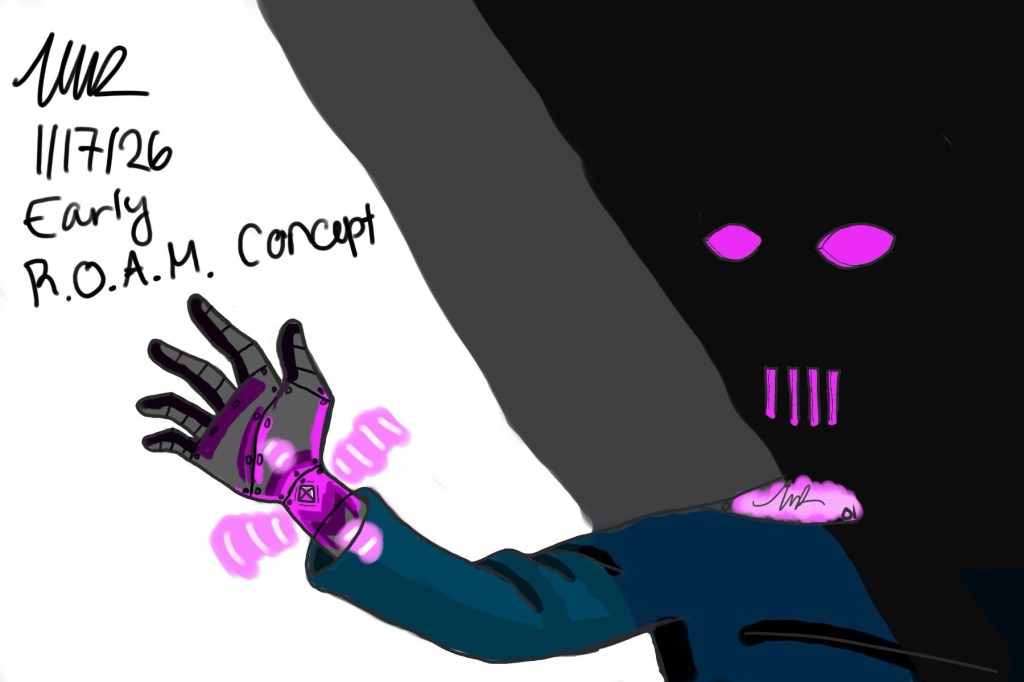
    .Early R.O.A.M. (Golem) Design for D&D Story & Concept Idea
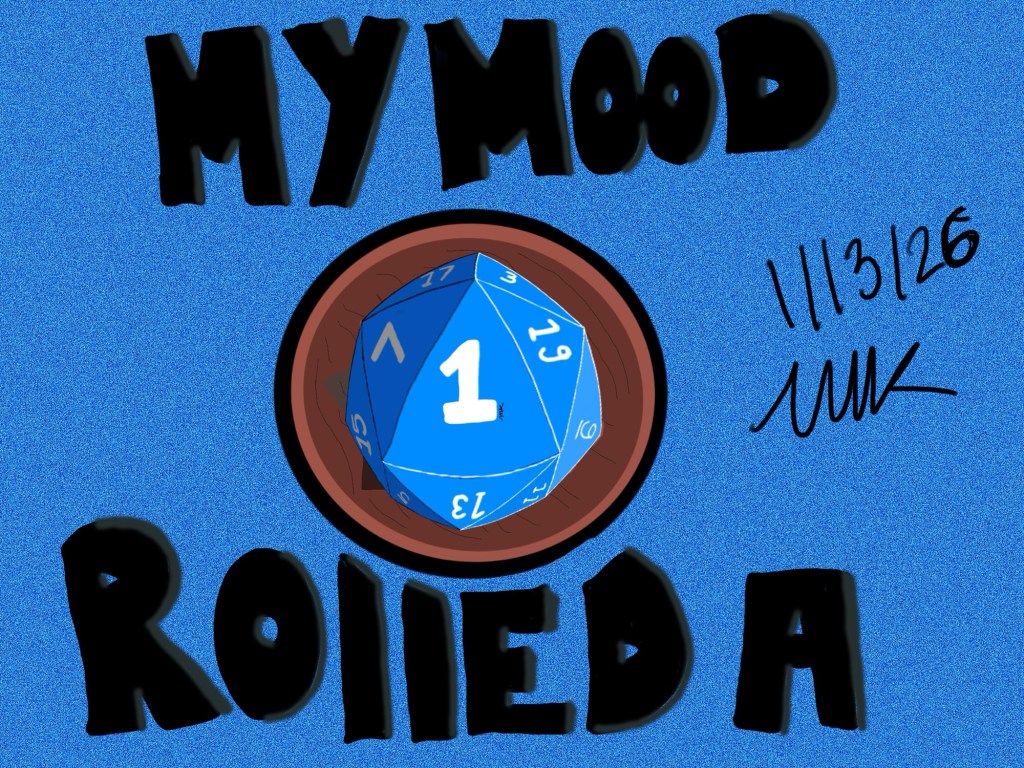
    My Dice Tray and D20 as a Potential Sticker or Mug Design
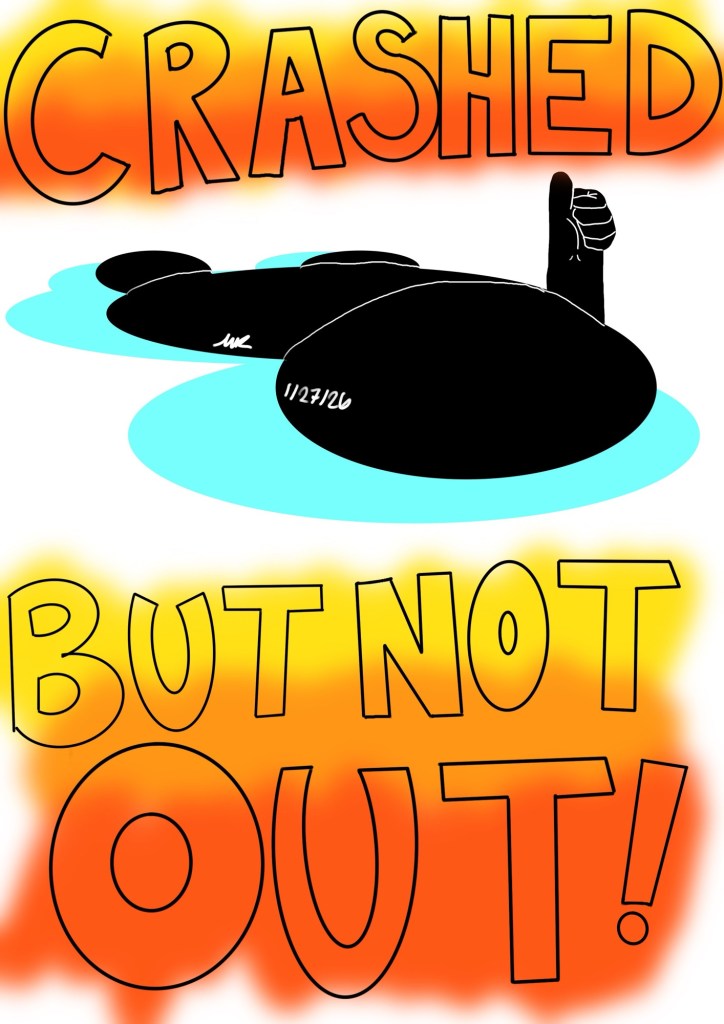
    My favorite so far; for whenever Life knocks me on my face everyday

    An Archive of Proof; Not A Gallery Exhibition 

    You know, even after days later of sketching and making things on Procreate, my mind kept telling me this same phrases over and over again when I returned to drawing;

    You’re not good enough.

    That same phrase had kept me from pursuing a lot of things because I kept comparing my work and skills to people who were far ahead of me.

    Comparison is cruel; it’s a knife that I kept turning onto myself often and I had thought about putting my stylus away.

    Even though I could make things other people said were nice to look at, I didn’t believe I was good enough to keep up the practice.

    That was the trap that I had to rewrite.

    It was simple a simple idea to try, but it wasn’t easy to overwrite years of being told that:

    1. Art can’t pay bills.
    2. You don’t know how to draw.
    3. You suck.

    Or well meaning things, like:

    1. You should make your own comics/animation/game/etc.
    2. Join a production.
    3. Go to school to learn more.

    Those were just as damning because I was no closer to being the next best animator or part of a AAA gaming company.

    Though, a different approach had to take this comparison’s place.

    Instead of creating things and showcasing them like it’s a gallery exhibition, I started making things as archives of proof that I could make and finish projects.

    Let Me Show You What I Don’t Know

    If you look at the examples of the illustrations I’ve provided, then maybe you can visually see where my skills are at.

    I don’t know how to use color palettes, I don’t know how lighting works, I try to use real life objects as my references (for example: my dice tray and 20 sided die), but shapes and line consistency were also a struggle, I have no clue how perspective works, and I have no idea how to make things look like neon signs.

    That’s okay. 

    This is my returning point, not my highlight reel; no one asked me to make the sketches after my coworker’s request, I wasn’t being commissioned, and I’m not trying to “make it big” in an overly saturated creative market. 

    Sure, I made a Ko-fi account—the sketches provided here are what I’ve posted there along side my D&D ideas—but I wasn’t looking to monetize my work. 

    I have misunderstood many things in my life, Ko-fi being another thing to my list, but I learned that trying to force myself to rush and play catch up with other people’s highlight reels poisoned my work.

    It’s a difficult thing to admit that I’m unfinished, but done is better than perfect or impressive.

    If people like the simplicity, gallows humor, and functionality of my sketches, then by all means, thank you.

    Regardless, I’ll keep on making things, just like how I run this blog: on my own, in the quiet hours of the night, when everyone else is asleep and my mind is running rampant, sometimes the things that come to mind provide enough inspiration to try out a new pen, color wheel, or even learn how to make actual shapes without free handing it.

    This isn’t a comeback story.

    It’s a marker — proof that I returned, even quietly.

    Explore The Archives

  • How I Prepare for Strength Training at Home After Manual Labor Shifts

    280+ Weeks of Experimenting, Adapting, and Improvised Movement

    If you’re trying to strength train at home while dealing with shoulder pain, bad knees, or lower back tension from work, your warm-up matters more than your workout.

    I’ve been training at home for over 280 weeks after repeated overuse injuries from manual labor jobs. This is the diagnostic warm-up I use before lifting sandbags, bands, or bodyweight so I can train consistently without making those injuries worse.

    Before Continuing

    In my entirety of writing about my Chaotic Life Strong personal training philosophy and regimen, especially in my Fitness Built For Real Life, By Real Life page, I want to make sure that I keep some truths at the forefront of this video demonstration before we continue:

    1. I am not a certified personal trainer; I don’t have credentials, a clientele, nor a degree in kinesiology, nutrition, or sports science.
    2. What is shown here has been roughly the culmination of 280+ weeks of trial and error and learning from multiple sources to have created my own hybrid process.
    3. How I train is rarely, if at all, documented; unless I’m performing any new exercises and need a visual cue to keep myself accountable. Else, those documented videos aren’t always kept for long.
    4. Everything shown is personal; it works for me, it works with my constraints: my energy, mood, and if I’m up to training the day of. 

    Nothing here is prescriptive, it’s not comprehensive, but if something catches your eye, you want to give it a try, or you don’t want to—it is fine either way.

    The work exists regardless. 

    I just wanted to share my process, why I chose to develop it the way it became now, and not let my hard won insights exist only in my head.

    How I Warm Up

    How I Train in My Little Studio Set Up

    Why I Warm Up Before Strength Training at Home

    My warm-up is diagnostic, not just preparatory. It ensures:

    • My body is ready for multi-planar movement and weighted training.

    • I’m not feeling tension, soreness, or discomfort in sensitive areas.

    • I protect areas prone to injury: shoulders, knees, lower back.

    Common Warm-Up Movements I Use

    • Cat-Cow, Upward & Downward Dog

    • Cossack Squats & Middle Split Progressions

    • Body Twists, Spinal Rotations, Arm Circles

    • Foam Rolling & Mobility Flows, Band Work

    • Animal Flows: Monkey, Crab, Tiger Walks

    These movements are staples for me. I modify or skip exercises depending on my energy, mood, and any lingering aches.

    Especially, in areas where I’ve been injured:

    • Shoulder.
    • Knees.
    • Lower back. 

    These are sensitive areas for me due to being inattentive, from compounding overuse injuries at my jobs, and persistent bad habits at home. 

    I took advice from my dad and previous bosses seriously: engage your core to prevent overcompensation.

    Applying this consistently has reduced chronic pain and made me more aware of how my body moves.

    This warm-up reflects how I train overall: adaptable, responsive, and built around listening rather than forcing.

    What This Is—and Isn’t

    This is my main example of what kind of fitness I train and how it has helped me prepare for longevity instead of chasing goals I don’t personally care for. 

    I’m not making this into a part of many videos; I’m not gatekeeping my training, I’m not hiding “my secrets” behind a paywall, I’m merely sharing something I’ve developed over 5 years because I’ve found something that works for me and my imperfect conditions.

    Just like my Chaotic Life Strong Exercise Flows PDFs:, you can try out what I’ve shared, take what you find useful, adapt it to your situation, or ignore this entirely. 

    How you choose to fitness is up to you, but I’d rather chase being able to bear hug and lift people in my 80’s than live in a broken body at 30.

    Explore The Archives

    Gifts From The Archives

    If you haven’t checked them out already, below are my PDF manifestos:

The Stratagem’s Archive

A quiet place for the worn-out, the wondering, the wandering, and the wildly curious who keep going anyways.

Skip to content ↓