Tag: DIY

  • Learning to Pick Locks Like In Video Games

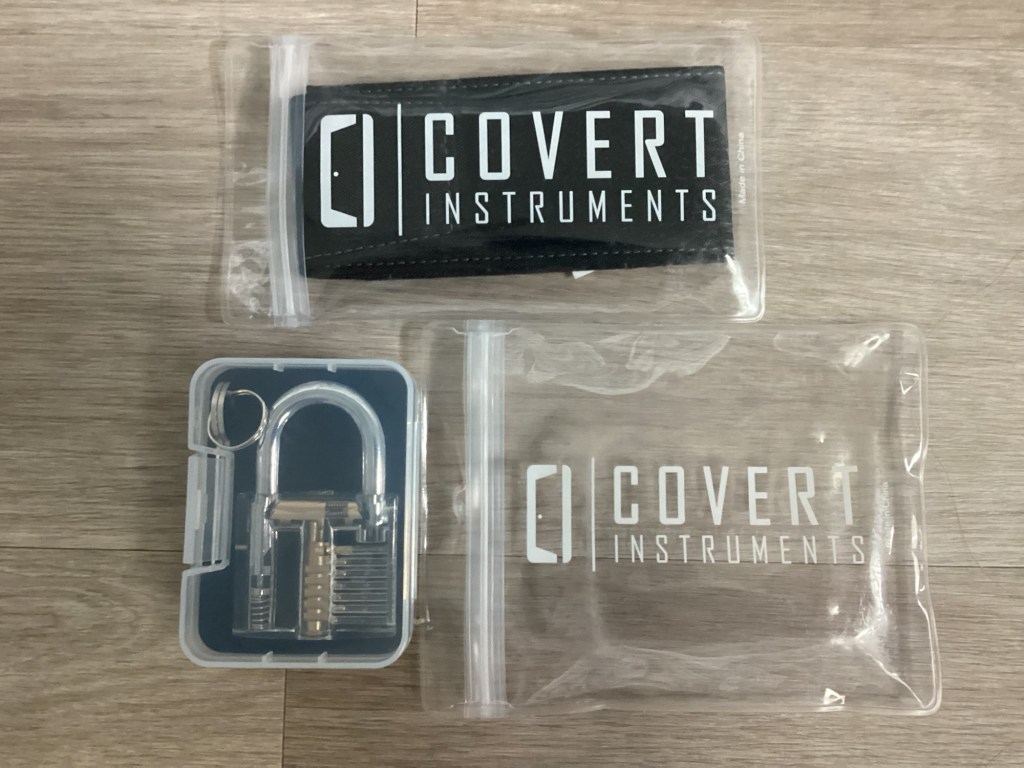
    The tools I got to learn my new craft and hobby of Locksport. From Covert Instruments.

    Video Games Opened The Doors For Me—Literally

    I am a curious person — few things have fascinated me enough to actually carry it out IRL and this new venture that I’ll be undergoing were introduced to me from various media.

    From video games, such as: Fallout 4(Bethesda Studios), Assassin’s Creed: Unity(Ubisoft), Dying Light: The Following(Techland and Warner Bros), to an engaging series, like Nevermore by Kate Flynn and Kit Trace(WebToons).

    This new skill that I’ll be diving into head first had been something I only seen on a screen and, now, I’ll get to experience it in real life: lock picking.

    I Am Not a Crook

    “I am not a crook”— Ruby Rose to Weiss Schnee, season 2, episode 1 of RWBY by Rooster Teeth.

    No, I am not pursuing lock picking to start a life of crime. Quite the opposite—I’m taking control of what I don’t know into my own hands. In the games and stories I enjoy immersing myself into, you have different options to progress the story, quest, or overcome obstacles.

    Using brute force causes loud noises, gives away your location, and alerting nearby enemies or NPC’s that someone is up to no good. When you’re starting at level 1, getting swarmed will be the fastest way you end up seeing the, “You Died”, on your screen.

    So, what are our alternatives? The sneaky, quiet way in: finding an opening, slip inside, and leaving without a trace. What happens when you encounter a locked door or can’t blend in, though? That’s where lock picking comes in — the real stealth mechanic.

    For non-gamers, this is typically how gamers progress through the game’s map, uncover loot, or survive without getting into a fight.

    Seeing and Getting the Feel of Things

    Covert Instrument’s clear lock and key. “Real rogue shit happening here.”

    I won’t be picking locks any time soon, but I do want to share how interesting the clear lock is. I’ve always wondered why keys had different grooves — with the clear lock, I can see why.

    The key lifts the pins inside of the lock to the correct height until they align. This is called, “The Shear Line.”

    This is when each pin is raised evenly, you are able to turn the key, and see the lock open. It’s really fascinating when you get to see how complex something as simple as a lock really is.

    The grooves and ridges in the keys aren’t just for show, it’s by design, it’s done with mechanics. And that’s an addictive feeling — getting to uncover the secrets of something hidden in plain sight everyday.

    It grants a little creative leeway when playing a rogue character, at least in my opinion. It takes much skill and knows how to pick a lock fast enough to not get caught and leave without a trace.

    Is This How It’s Like In Real Life?

    This is the ultimate question I’ll be able to answer with learning locksport; whether which one video game was right on the money or making up their own system to engage the players with a new system and environment, than to actually learn to pick locks for reference.

    Turns out, the real way to learn something is to understand how the mechanisms work.

    Where My Journey Could Go

    I am not claiming to be an expert, I am allowing my curiosity to get the best of me. That’s how my brain will be able to get rid of the tension I carry from and at work while indulging in the things I’m curious about.

    I’m just someone who is simply asking, “What if I tried this?” I share the skill I want to learn, how I got introduced to such skill or hobby, I give it a try for X amount of days, then share what I’ve learned at the end of my timeline.

    I’m usually one to use force than patience, so likely learning to be patient with these tools could transfer over to being patient with people. At least, that’s the hope.

    Hey There — Let’s Chat

    I’d like to hear from you. Really.

    • Have you ever been curious about something, but never pursued it? What was it?
    • Were you inspired by media as well, be it video games, books, movies, or other?
    • What’s your equivalent to lock picking — something oddly specific, and a little taboo, that you wanted to understand?

    Drop your thoughts in the comments below. I’d love to know what doors you’re thinking about opening next.

    If not, that’s okay. You made it to the end and that means a lot more than you know, and I’d like to say thank you.

    The Stratagem’s Manifesto

    Otherwise, you can find my D&D inspired work or other tings I’m pursuing below. Until next time, I’ll see you all in the archives, another time.

    Quarantine Life: In The Confines of Comfort: Idea #1:

    The Town That Forgot How to Sleep: A D&D Prompt #2 (Seedling):

    Starting From Scratch: Learning to Code After a D in University: (Seedling)
  • What If I Got to Build a City Exactly As I’d Want It To Be?

    How would you design the city of the future?

    If I could design the city of the future, then I would introduce more opportunities for play, learning, and challenge. It would still be optional, like a bike and zipper lane. Although, it would bring the playfulness most people have out to try something novel and new.

    For example, the outdoor calisthenics gyms are in dedicated areas, similarly closed off like and away from the public eye as the morgues and hospice and hospital care. Out of sight and out of mind, unless we really need those services.

    Imagine this; you’re minding your own business and you see children and grown adults alike playing hopscotch along the sidewalk. Or someone is navigating a small maze next to a fountain. Or friends are challenging each other to a battle of wit, words, riddles, and rhyme.

    Everything would be optional; these obstacles and challenges are visible and part of society to challenges ourselves to move, think, or play differently. It’ll be adding small doses of chosen, personal chaos in our set routines.

    Nothing would obstruct, block, or hinder anyone or our day to day. Rather they would be there as reminders to move, think, and do something different once in a while.

    If you liked this prompt or felt it resonate with you drop a hi in the comments, then you can explore the other examples below. Subscribe and follow me on this journey of how writing can be a way to ground me, ground us. Thanks for reading, and I’ll see you when the Archives open again.

    What The Little Things Mean to Me — And Why They Matter More Than They Should.

    If You Gave Me A Blank Page, This Is What I’d Start Writing About.

    I’m Afraid of Wasting My Potential — So I Learn Everything I Can, While I Can.

  • I’ll Tell You The Secret of What Motivates Me

    What motivates you?

    I’ll tell you what motivates me, it’s simple really; Much like in my blog post I’m Afraid of Wasting My Potential — So I Learn Everything I Can, While I Can., I am motivated by my anger, curiosity, spite, and fear of regret.

    “…I’m striving to reduce fear’s hold on me and to expand my options. To use my anger against myself, circumstances, other people that irritates me for something constructive…”

    My Goals Go Through a Process – Archivist

    I hate feeling small, worthless, useless, and like a failure. This doesn’t have to be just feelings in a workplace, but also in my relationships too.

    If I feel this same anger, spite, and the regret that taking no action will lead to feeling even worse regret, then I will take necessary action. I’ve done plenty of reflecting, it’s just a matter of doing the extra work of following through.

    Many of my goals, curiosities, and actions do come from a place of mild obsession. So, after years of telling myself, “don’t do that or I’ll fail,” I flipped it around and started to say, “If I DON’T do that, then I’ll have actually failed.”

    Enjoyed this post? Hit subscribe so you don’t miss the next one.

    New posts daily to weekly. Subscribe to keep up with my latest writing and reflections.

    Check out more of my other daily prompts or other works below.

    I’m Afraid of Wasting My Potential — So I Learn Everything I Can, While I Can.

    If You Gave Me A Blank Page, This Is What I’d Start Writing About.

    The Real Pros and Cons of Rage Rooms (From Someone Who Works in One)

  • Starting From Scratch: Learning to Code After a D in University: (Seedling)

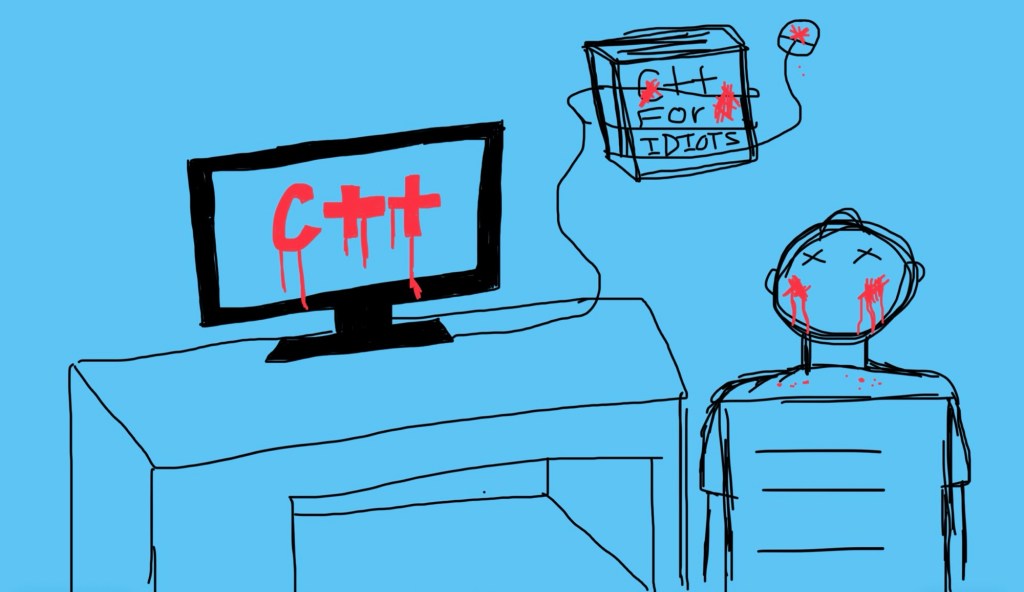
    “My coding NIGHTMARE!!!”

    My C++ Nightmare!!!

    Starting Over: Why I’m Giving C++ Another Shot

    My first experience with C++ was a spectacular failure.

    Ten years ago, I walked into a university computer science class with zero coding knowledge and a very big dream: I wanted to make my own video games. That dream quickly turned into a nightmare of syntax errors and confusing concepts. By the end of the semester, I had a D- on my transcript and a deep-seated belief that coding just wasn’t for me.

    My path to that point didn’t help. Unlike many of my classmates, I never had a computer science class in high school. While they were building projects, I was learning a trade with my building and construction major. My only prior experience was messing around with RPG Maker on my English teacher’s computer—a memory I’d long since buried under the weight of that D-.

    For a decade, that D- was the last word on the subject. I told myself it was fine; there were other things to learn, other paths to take. But the idea of building something from scratch never completely left me. The curiosity was always there, simmering in the background.

    Then, just 13 days ago, I decided to face that old ghost. I wasn’t going back to a university classroom or picking up a massive textbook. Instead, I’m starting from the very beginning with an app called Mimo.

    This isn’t about getting a certification or a perfect grade this time, though that would be pretty useful. It’s about proving to myself that I can learn this, that my past experience doesn’t define my potential, and that maybe, just maybe, I can turn that old dream of making games into a reality.

    In this series, I’m going to share exactly what it’s like to start over with a skill I thought I failed at. Part two will dive into the specific tools I’m using to learn, and part three will cover the lessons and progress I’ve made so far. If you’ve ever felt like you’re not smart enough to learn something new, or you’re stuck on a skill you gave up on, this is for you.

    Join me on this journey as I get back to the basics and finally build the coding skills I once thought were out of reach.

    The archives will now be closing, I will see you in part 2, and until we open again. Thank you!!!

    I’m not an expert—I’m a learner.

    If you’re into stories about figuring things out, trying again, and making progress on your own terms, hit that subscribe button and join me on the journey.