Category: Personal stories

  • Before You Celebrate Your First 100 Downloads, Read This

    I thought my writing was finally reaching people. My metrics told a different story.

    I’ve been writing on WordPress for about 8 months now — still a baby writer — and in that time I’ve published 7 PDFs.

    Five of them were personal reflections. Two were fitness-related, based on how I personally trained over 280+ weeks.

    Over the last 7 months, I watched my total PDF download count steadily climb to nearly 190.

    As a new writer, I was shocked.

    I’ve never thought anything I’ve made actually resonated with other people online — so seeing those numbers go up month after month felt like proof that maybe my work was finally landing somewhere.

    I let myself feel hopeful.

    I thought:
    “People are choosing to download this.”

    There was just one problem.

    While my PDFs were being downloaded consistently, my blog views, visitors, likes, shares, and subscribers weren’t following the same trajectory.

    If nearly 200 people downloaded my work, why wasn’t anything else moving?

    • No increase in followers.
    • No comments.
    • No returning visitors.
    • No meaningful time spent on the blog itself.

    Just… downloads.

    At first, I told myself that maybe the people downloading my PDFs were just hard to track.

    Maybe they were using private browsers.
    Maybe they were in incognito mode.
    Maybe they were behind VPNs.
    Maybe they opened the PDF offline after downloading it.

    In my head, these were real people — just statistically invisible ones.

    But over time, I learned something I didn’t expect as a new creator:

    Downloads don’t always mean readers.

    Bots crawl websites constantly. They scan pages, follow links, and yes — they can download files like PDFs. Sometimes it’s for indexing. Sometimes it’s for scraping content. Sometimes it’s automated vulnerability checks.

    And they don’t just stop at your blog.

    I noticed that even my Ko-fi page — where I keep my other creative work like sticker designs, D&D story expansions, and concept art — had a few external views that I couldn’t account for.

    Before, I assumed those were curious people checking out my work.

    Now, I’m not so sure.

    Coming to this realization forced me to separate what the numbers were showing me from the story I wanted them to mean.

    So now, when I check my stats, I try to keep a few things in mind:

    • A download is not the same as a read.
    • Traffic is not the same as engagement.
    • And early growth isn’t always human.

    Despite everything that’s happened, my stubbornness would let me pause for a moment, then have me keep publishing. Even when engagement and views are quiet.

    Since I don’t have advanced analytical tools for my blog, I, The Archivist, will never know for sure if anything happened on my blog was due to a person or a bot.


    If you’re a new writer watching your download count rise faster than anything else — celebrate carefully.

    Make sure your reality isn’t running ahead of your assumptions.

    That doesn’t mean your work doesn’t matter.

    It means that when you’re starting out, your metrics can’t be your only source of truth.

    If you’re early in your writing or creative work and your numbers don’t seem to match — don’t immediately assume you’ve failed, and don’t immediately assume you’ve “made it” either.

    Look for signals that are harder to fake:

    Someone spending time on your page.
    Someone clicking through to another post.
    Someone subscribing.
    Someone replying, sharing, or bookmarking your work.

    Even one real person choosing to stay is more meaningful than 50 automated downloads that never read a word.

    I’m still new at this. I’m still figuring out what real engagement looks like.

    But I’d rather build something slowly with honest signals than rush to celebrate numbers I don’t fully understand.

    If you’re building too — keep going.

    Just make sure you know what you’re actually measuring.


    Explore The Archives:

    Here are a few articles about other things I’ve written over time:


    If You Made It to The End

    I support this work myself. If you found value in it and want to help keep it available, optional support is here 🌊.
    I’m making a sticker design based on my Chaotic Life Strong PDFs. This is what the draft looks like as of right now.
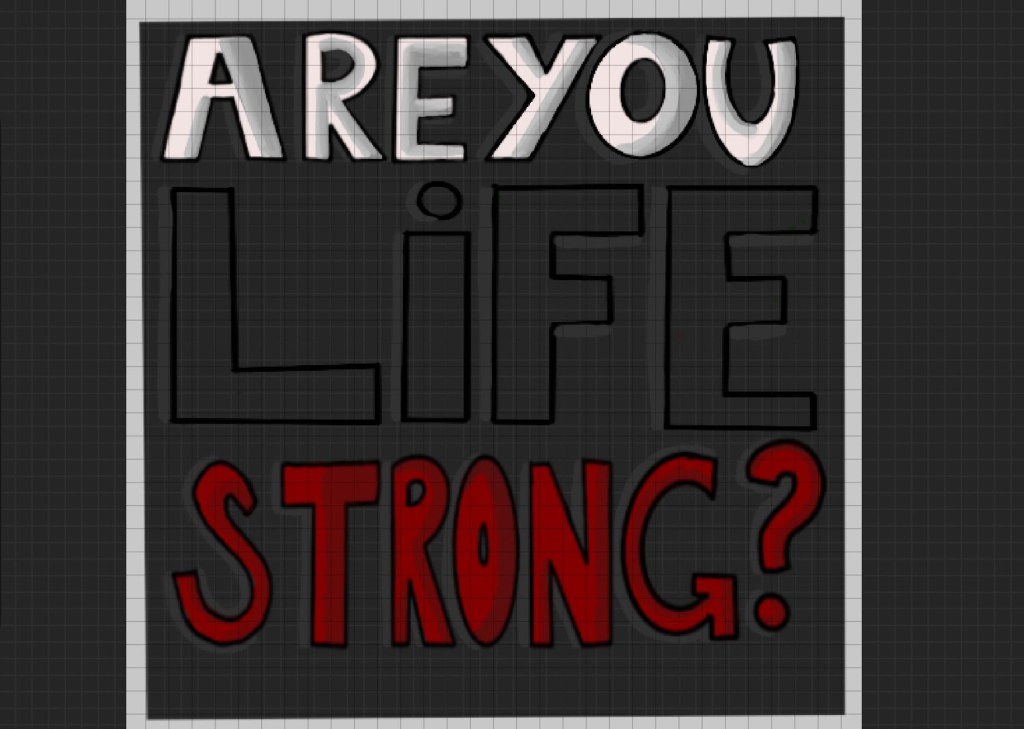
    My Chaotic Life Strong inspired sticker draft

    If you’re curious to see what the end result will look like and would like to have a copy, check out my Ko-fi page by waving below. It’s my secondary creative archive.

    No pressure—just a way for me to say thank you for spending time with The Archives.

    Otherwise, I’ll see you all later in The Archives.

  • Could We Talk About Little Habits We Picked Up From Somewhere and Kept Them Going?

    How a Marine Biology Student Gave Me a 10 Year Old Habit

    Back when I was starting university in August of 2015, I remember sitting in my Communications 101 class, with a professor that was close to retiring that he was pretty lax and was ready to yeet himself out the door, listening to my classmates do presentations.

    One after another, I was bored out of my mind waiting for class to finish so I could go to my dorm to play Vain Glory, this was the Korean equivalent of League of Legends, except one presentation stood out to me that day.

    I remember he was a tall skinny Asian local boy born and raised in the same state as me, except he was a Marine Biology student, whereas I was in Engineering at the time.

    So, there’s a lot of trash and pollution in our oceans and our economy is especially dependent on the ocean for food and for our tourism sights. This Marine Major brought a plastic straw sleeve and a picture of a fish to demonstrate that a lot of fish are found dead because they swallow debris believing it’s food.

    Anyways, the boy demonstrated for his presentation that, if we were to tie the straw covers, then even if a fish swallowed a straw sleeve, the knot would still allow room for water, food, and oxygen to enter through the fish’s maw.

    Therefore, preventing them from getting dying prematurely outside getting caught by hooks and nets and yanked out of the water.

    Why Are You Telling This Story?

    I’m sharing this story because, a decade later, I’m still tying little knots in whatever I can get my hands on because of this boy’s presentation.

    Why did I keep this up?

    That’s a great question!

    I don’t know why.

    I can’t remember why the presentation convinced 19 year old me to make tying knots in plastic my 29 year old self’s new compulsive habit. Yes, it’s compulsive because my brain won’t let me eat in peace or leave the table until I tied a knot in my straw covers or chopstick sleeve, despite them being wrapped in paper.

    Yet, she never got social confirmation that reinforced this habit, nor feedback that this habit of hers was helping.

    It became something she did, that I do, even when meaning is lost.

  • The Writings on the (Rage Room) Walls — Are We Striving to Leave Something Behind?

    The Walls Are Covered in Writing From Ceiling to Floor

    When I first started working at the rage room part-time months ago, two things immediately caught my eye:

    1) how my eyes burned from how bright the black lighting was.

    2) how much history—from names to social handles to straight-up graffiti—had been scrawled across every wall and ceiling over the four years this place has been open.

    As I became an employee, I never questioned why people were more excited to write on the walls than to break plates or spray neon paint.

    It took me over five months to realize something quietly profound—somewhere between the crashes of sledgehammers on glass and the clang of crowbars on wood.

    I started to wonder:

    Why do we write books? Compose songs? Build companies? Contribute to something larger, even in small ways?

    And then it hit me.

    I was asking the same question I’d been quietly asking about my own blog, The Stratagem’s Archive.

    Is my blog really all that different from a rage room wall—an ever-growing collage of words, reflections, and fleeting marks? An attempt to leave something behind, knowing it could just as easily be painted over one day?

    The more I thought about it, the more I realized how similar it was. The excitement of writing something meaningful, not knowing who will see it—or if anyone ever will. And yet, we do it anyway.

    Maybe, in the end, we’re all just trying to leave some kind of proof that we were here.

    People’s Excitement is Palpable Towards Those Bright Neon Pens

    Every group that’s come through before and after my time here has one thing in common: they always write something on the walls.

    I’ve seen names, birthdays, and declarations of love written in neon pinks and greens. I’ve seen angry messages—“I hate your guts and hope you suffer”—scribbled right next to doodles of anime characters or someone’s best friend’s name with a heart around it.

    Once, a couple came in for their anniversary. After their session, they asked if they could write on the walls. I said yes.

    When I checked back, I saw their names written in a gorgeous, looping scrawl right across the mural of angel wings—the one spot we ask people not to touch because it’s meant for photos and memories.

    My coworker wiped it off minutes later. We both knew it had to go. But as the ink faded, I couldn’t stop wondering if, for that couple, those few neon words were their way of saying, “We were here. We loved. We lived.”

    When I brought that up, my 21-year-old coworker told me, “Don’t think too hard about it.”

    So, naturally, I thought too hard about it—and wrote this instead.

    Would It Be So Wrong to Not Be Remembered?

    Let’s ask something uncomfortable:

    Would it really be so bad if we weren’t remembered?

    We’ve built entire systems to preserve names—colleges, hospitals, parks, cars, snack brands. Hershey. Ford. John Hopkins. Epicurus. Confucius. We build monuments to the idea of being remembered.

    But what if the quiet act of living fully was enough?

    I don’t advertise my real name anywhere on my blog. I don’t have social media. I’m practically a ghost in the modern world. And honestly? I like it that way.

    Sure, The Stratagem’s Archive is public. Anyone can stumble across it, read my reflections, and wander through my archives. But this is my mask. My little corner of anonymity and freedom.

    I don’t want to be famous. I just want to leave something honest behind—something that glows quietly for a while before it fades under the next coat of paint.

    Because maybe that’s enough.

    Maybe we don’t need to be remembered forever—just long enough for our light to touch someone else’s, even for a moment.

    Reflection and Call to Action

    Thanks for spending a few minutes here in the Archive with me. If this reflection sparked something in you, share it, like it, or subscribe to follow along for more quiet musings, prompts, and experiments.

    Or, if you’d rather stay anonymous, you can always send me your thoughts directly at—whatimtryingoutnow@gmail.com—I read every message. Whether you write publicly or quietly, we all leave our marks somewhere.

    Here’s to leaving them with intention, even if they someday fade.

    Reflections of Rage Rooms and Memories:

  • Alzheimer’s Curse: How It Robs Memories From the Afflicted and Their Loved Ones

    Welcome — However You Found Your Way Here

    The Cruelty of Forgetting

    Forgetting your keys, your wallet, or even milk from the grocery store is frustrating. But watching someone you love slowly forget you—that’s a pain words can barely capture. Alzheimer’s and dementia don’t just steal memories; they steal the shared history that binds us, leaving the afflicted unaware and their loved ones carrying it all alone.

    It’s tragic and cruel growing up and living with someone with Alzheimer’s.

    My grandpa had Alzheimer’s when I was growing up. Sometimes he looked at me and saw a stranger, not the grandchild he once held in his arms. I didn’t understand why he would look at me like that.

    I hated it, didn’t understand as a kid, and I would cause trouble to my grandpa because of his Alzheimer’s.

    I wasn’t the only one who was suffering though.

    My grandma had to retire from work early to care for him, while my dad would rush home from work early to ensure he didn’t wander too far from his routines or get lost.

    Every day felt like a delicate balance between vigilance and heartbreak.

    Out of frustration, I used to lock the door when he was outside. He’d pull at it until you could swear it was about to come off its hinges. My grandma would yell at me to open it, and I would. He’d walk in as if nothing happened, past me like I didn’t exist.

    It was worse than being ignored.

    I remember sleeping over at their house as a kid. In the dead of night, something hit my head. In the dark, through bleary eyes, I saw my grandpa standing over me. He tapped my head three times, as though fluffing a strange pillow, and not hitting my head full force.

    Unnerving, yes—but I was tired, and I went back to sleep with a dull headache.

    My grandma told me he would call her “fat lady” when he forgot her. She would walk back into the room, then back to the living room, and he’d remember. He’d ask where “the fat lady” went, and she’d tell him she’d gone home.

    Moments of Lucidity

    Occasionally, there were brief windows of clarity. He would shower, eat, dress himself, and speak to my grandma as he used to. He always followed his routines: cleaning the yard, walking to McDonald’s for coffee, sitting at the tables, then walking back home.

    He would hum to himself, a simple melody without words. I can barely remember the tune now, but it reminded us he was alive, present, even when he wasn’t fully there.

    Those moments were fleeting, yet precious—tiny glimpses of the man we knew and loved. They were a cruel gift: the contrast between what he could remember in fragments and what he had already lost made every shared moment bittersweet.

    The Weight on Loved Ones

    Alzheimer’s doesn’t just affect the person with the disease. It reshapes the lives of everyone around them. My grandma, my dad, and I were constantly alert, walking the line between guiding him and letting him retain independence.

    Friends and neighbors understood the weight we carried. They knew who my grandpa was before Alzheimer’s took him—a presence lost, yet physically still with us.

    We were caring for someone trapped in a body that refused to remember, and the emotional toll was relentless.

    My grandma made new routines for him: jumping on a trampoline, writing his name repeatedly on paper, practicing tai chi—anything to keep his body moving and give them both a shared activity. He enjoyed these moments, and they gave structure and connection amidst the chaos.

    A Brave Choice

    Alzheimer’s didn’t kill my grandpa. His medication did. In a rare moment of clarity, his doctor explained the medicine could help his Alzheimer’s—but it carried a risk of a heart attack.

    My grandpa chose clarity, fully aware of the danger. Tragically, my family wasn’t home when he passed. That night, he showered, ate, and talked with my grandma as himself. When he said he was “going home,” my grandma wasn’t prepared for how she found him the next morning.

    He went to sleep and never woke up again.

    His courage in the face of such risk was both heartbreaking and awe-inspiring—a final assertion of agency in a life stolen by disease.

    Yet it felt like a deep wound being shoved with salt: painful, deeply hurtful, and full of nothing but lingering regrets.

    Fragments That Remain

    All that’s left of him for me are his wedding band, his watch, his love for Nutter Butters (despite him not wearing his dentures), and snippets of the tune he used to hum.

    These fragments are sacred—they’re proof he existed beyond the fog Alzheimer’s created.

    The Ripple Effect

    Alzheimer’s ripples through families, friendships, and communities. It teaches grief, patience, and the value of presence. It forces us to treasure the small things: a smile, a remembered joke, a touch, a familiar gesture.

    Because once they’re gone, they may never return.

    Hold onto your loved ones, and hold onto the memories you create together. There’s no way to predict what will be forgotten or remembered—but every moment matters.

    Awareness & Action

    Alzheimer’s and dementia are cruel not just for the afflicted, but for everyone who loves them. Educate yourself, check in on your loved ones, and offer support to caregivers—you never know how deeply this disease can touch lives.

    If my story touched you, or helped you understand even a fraction of what it’s like to live with—or love someone with—Alzheimer’s, I invite you to like, share, and subscribe.

    Not just to support my blog, but to help raise awareness about this devastating disease that touches so many lives.

    June is Alzheimer’s & Brain Awareness Month in the U.S., and September is World Alzheimer’s Month globally.

    Use these moments to educate yourself, support caregivers, and advocate for those whose memories are slowly stolen away. Every action, every conversation, every shared story matters more than you could know.

  • Fighting on Your Own Terms: Debt, Defiance, and Building a Life That’s Mine

    Three months ago, I was in significant amounts of debt, wandering through jobs I didn’t like belong in, and trying to resist life’s pre-existing scripts. Today, I’m down by thousands and building a foundation for the life I actually want. Here’s the updates so far.


    Ainsi Bas Ma Vie: That’s How My Life Goes

    Three months ago, I wrote about the mountain of debt I accumulated before and after I started living on my own — over a huge deal worth of debt— and how it threatened to define my life before I even truly had a chance to shape it.

    Since then, I’ve chipped away at it, one payment, one decision, one stubborn move at a time. Today, the number is still daunting.

    It’s not gone. It’s still heavy. But it’s shrinking, and with every dollar, I reclaim a little more agency over my life.

    I’m terrified of debt because of how much it stops me from doing and experiencing things I want to do and try out.

    I never liked how all of my attention has to go to debt, it’s super draining, but at least I can see the near end of the pothole filled road I drove onto myself because of the choices I made over time. Though I’m slowly getting closer to smoother pavement. Just a little closer now.

    Choosing a Path That Feels Like Me

    Speaking of choices, growing up, I was told what my life “should” look like. Work in hotels — the backbone of our local economy. Join the family’s construction business. Learn Japanese. Take the safe route. Follow the script.

    I tried none of it. The roles didn’t fit me. I didn’t like crowds, didn’t thrive in certain structures, didn’t want my last name to carry me into someone else’s office. I wanted to forge my own path, even if I had no map.

    So I wandered through jobs and higher education—with how long I was in-and-out of school, I could have gotten my Master’s degree in something. Instead, I’m a University and community college “drop out.”

    I think I’ve written about how I don’t have a degree. Surprisingly, I have a Liberal Arts degree, but, to my knowledge, this degree hasn’t really helped anyone out.

    Plus, I don’t have the diploma framed, I don’t have it at all, so I don’t have that fancy paper saying I did go through higher education. Either way, to me, a Liberals Degree is useless, or I haven’t figured out how to frame this degree as useful, helpful, and to other people’s benefit. Oh, well.

    Anyways, the jobs I took were often in roles that others might dismiss, or outright scoff at: customer service, grocery work, fresh food — jobs without fancy titles or corner offices.

    Guess what? This is true to some extent, but this was my fault for barring myself from opportunities I could have taken when I didn’t bother looking for and applying to scholarships or internships to stick it out.

    The “Should have, could have, would have’s” of the world at play people, let’s hear it.

    These jobs weren’t glamorous, but they were mine. I was building a foundation with the tools I had, no matter how much I hated them and myself for working there.

    Rage, Rebellion, and Sanity

    Some of those jobs taught me one thing clearly: never put my sanity on the line for someone else’s frustration. People will take their anger out on the easy target — and I learned quickly I didn’t want to be that target.

    My current work — a warehouse job and a rage room gig — are dualities of that script.

    Work at the warehouse gives me so much energy to want to destroy things and want to break people, so much people piss me off, but I need to keep my cool here.

    In customer service at the rage room, people vent, but not on me. They break objects, not spirits. I get paid, they get release, and I keep my energy for building my future. It’s still work, but it’s aligned with my boundaries and my life philosophy.

    One Step, One Victory at a Time

    Like the protagonist in Indila’s Ainsi Bas La Vida, I’ve resisted a world that wanted to define me. Instead of picking someone to love who isn’t socially acceptable, I’ve walked a path that was messy, even if it’s slower, less glamorous, and full of obstacles.

    And, like Indila’s story in Ainsi Bas La Vida, there’s always risk, judgment, and uncertainty — but also the thrill of making choices that are truly mine.

    Every payment toward debt, every post, sticker, hoodie, manifesto, and careful decision is a brick in the foundation of the life I’m building. One that I own. One that I’ve fought for.

    The debt still exists, but it’s become manageable. Not gone. But every number represents resilience, agency, and the refusal to fade quietly because of someone else’s expectations.

    I don’t know when the journey will end, or if I’ll ever feel fully “done” with it. But I do know this: I’m choosing my fights, protecting my mind, and constructing a life that’s mine — piece by piece, step by step.

    Reflection

    If anything here resonates, I want you to take a moment and honor your own fight.

    Maybe you’re battling debt, following a path others don’t understand, or just trying to carve space for yourself in a world that wants to keep you small.

    Every little victory matters. Every decision that aligns with your values is a rebellion worth celebrating.


    If my words connect with you, consider liking, subscribing, or sharing this post. Every share helps others who feel stuck, unheard, or underestimated find this little corner of the internet — a space to remember that it’s okay to rage against the world’s expectations while building the life you truly want.

    Keep raging. Keep building. Keep shining.


    Building One Brick at a Time

  • From Financial Pursuit to Connection: How Plans2Action Became The Stratagem’s Archive

    The Shift Started With a Name Change

    Three months ago, when I first started my blog, it was originally known as “Plans2Action.” I don’t know how I got it in my head—maybe because I realized that every day I sat in traffic, I wasn’t getting paid passive income outside of my retirement and investing accounts—but I had the great idea that, when I created my first ever blog, it would help bridge that passive income gap.

    At the time, it was an idea that got me to write whatever came to mind and hit publish.

    I had no service, no book, no merchandise to sell, so this was pretty ambitious for someone starting at ground zero. I had no idea how I was going to bridge this elusive money gap, but that wasn’t going to stop me from trying.

    The Persona I Started With

    In the beginning of this journey, I stopped myself from trying to figure it out…

    “Plans2Action’s” persona that I tried crafting it around was the “villain hiding in plain sight.” I was using Google Gemini to help me and I was struck with inspiration to write like a villain laying out their plans of chaos, routine, and being an inconvenience to everyone.

    I hated it.

    I know that I’m not a hero type, but calling myself a villain or a mastermind in training would turn my mood foul. It grew stronger when I made it through my first week of writing and I wasn’t getting much views, likes, subscribers, or shares.

    Yeah, I know, sounds delusional, right?

    I felt my soul getting crushed by another outlet outside of my mind-numbing job and the expectations of what “success” is supposed to look like.

    I wanted to quit. I had quit a lot of things before:

    • wrestling after a knee injury and fear of my “teammates,”
    • supporting the Invisible Children program,
    • quitting BJJ due to finances being tight and a back injury from working too much and poor lifting mechanics,
    • and I had been a job hopper after staying for 6 months to 3–8 years with each job.

    Every time I stopped something, I grew numb that I’d never stick with anything, and I hated myself for being a quitter.

    “Winners never quit and quitters never win” hammered into my head until it was engraved as my default mode of thinking.

    I’m a quitter. I’m a loser. I can’t do anything right. This blog is already a failure because I am a failure. What evidence do I have that says otherwise?

    With writing? Even though no one was reading my early work, I realized I was publishing from a desperate lens, not an open or welcoming one.

    This had been the wake up call that slapped me awake that I didn’t realize had whacked me to widen my eyes and thinking.

    From Desperation to Curiosity

    Somewhere between my first and second month, something shifted. I stopped trying to make my blog sound like a performance and started letting it sound like me.

    I stopped writing to “capture” attention and started writing to connect.

    That’s when Plans2Action stopped feeling like a name and started feeling like a costume I didn’t really like wearing.

    I wasn’t laying out villainous plans; I was recording my life, my observations, my frustrations, my curiosities, and my hopes.

    This wasn’t about action for action’s sake anymore. It was about strategy, thought, and reflection — not just “plans” but the archive of someone actively becoming something more than they ever were.

    Why The Stratagem’s Archive

    I can’t remember how I came up with The Stratagem’s Archive as my new name. I wanted to have “archive” in it, though I guess Plans2Action was lingering when I discarded it. Even though this sounds like some Helldivers fan page, it became something I ran with and grew.

    And it sounded cool to me.

    Eventually, the name clicked because it gave me permission to treat my blog as a living library rather than a sales funnel.

    It gave me the space to be messy, vulnerable, and honest without forcing everything into a neat conclusion.

    And ironically, when I stopped chasing clicks, the writing became easier, the posts more authentic, and the small but steady growth began to happen naturally.

    Takeaway

    This blog has become my record of showing up — even when no one was watching, even when my stats plateau, even when it would be easier to give up.

    It’s proof to myself that I can build something slowly, imperfectly, and on my own terms.

    And maybe that’s the real shift: not just rebranding a blog, but rebranding how I see myself. Not as someone who quits, but as someone who’s still here, building a portfolio, proof that I was done with letting fear rule what I did and didn’t do.

    A Gentle Ask

    If you’ve made it this far, thank you. Truly. Every like, share, or comment helps this little corner of the internet reach more people who are tired of cookie-cutter stories and want something real.

    If this resonated with you, consider subscribing or sharing this post with someone who might need to hear it.

    New subscribers get direct access to my newsletter, “Letters from the Void”, access to my manifestos, and behind-the-scenes projects I’ve been working on from the trunk of my car and in the dead of night.

    When others are typically asleep, I’m awake in the stillness.

    You’re not just reading words on a screen. You’re part of this archive, too.

    Other Reflections Below

    I’ve reflected on other things regarding finances, feeling worn down, and never enough in these posts below. Exploring them will show you more of the archives, and potentially help you articulate something you might have had trouble thinking on.

  • Protective Measures: Learning to Guard my Time, Energy, and Worth

    Tell us about a time when you felt out of place.

    This Is a Daily Occurrence—It’s a Protective Measure

    I’ve always liked interacting with people. I’ve liked feeling connected, being part of someone else’s life, contributing, sharing. But over the years, I’ve been burned too many times to give people chances freely anymore.

    I’ve been the friend who gave willingly: my time, my energy, my support, my loyalty, and even my money. I was either your biggest supporter or your biggest annoyance, and I did it without question. I showed up, I helped, I invested myself. That was then. Now? Now is a different story.

    Work and Boundaries

    At work, I’m wary of new people. I used to take on the responsibility of training new hires because I knew the behind-the-scenes processes, and I could teach others efficiently.

    I couldn’t understand how being good at one task could translate into being competent in others, but I did it anyways.

    Over the years, I learned to read people quickly. I could tell who would do well during training and beyond, and who wouldn’t even try. My criteria were simple: proactiveness, accountability, and responsibility.

    Now, in a new shift, I don’t invest the same energy. People are disappointing. Some new hires frustrate me because of the way they handle their responsibilities—or don’t handle them at all. For instance, in the warehouse, instead of grabbing the necessary equipment and jumping into sorting freight, they pass the work off to others, letting areas pile up while the rest of us fall behind.

    They stand there, staring as though saying “someone has to do it,” but they won’t move. Watching that laziness frustrates me beyond words.

    I hate it. I hate them. And I hate the way it makes me feel compelled to compensate for their apathy.

    This isn’t just a work issue—it reflects the larger patterns I’ve experienced in friendships. I’ve had to be hurt and let down repeatedly to learn my values and what I’m no longer willing to tolerate.

    Reciprocity. Respect for my time, energy, and boundaries. A single word text saying “I’m busy” instead of ghosting for weeks. Proactiveness. Accountability. Responsibility. Basic qualities, yet so rare.

    The Breaking Point in Friendship

    Before walking away from a decade-long friendship, I tried to communicate my boundaries clearly. I told my “friend” I was busy working my two jobs and would respond when I could. He ignored it. He continued texting and questioning my silence. He claimed he valued our friendship and would be there when I needed him.

    Then I needed him.

    I told him about something unimaginable: that my family had been attacked and killed. The silence that followed from him lasted two weeks. Two weeks where I had shown the deepest vulnerability of my life and received nothing in return. He only responded when I brought up a trivial event—a convention we had planned to attend months after the incident.

    When we finally hung out, he clung to his girlfriend like I was a stranger. I told them I felt out of place, like a third wheel. Walking through that convention, I realized I wasn’t a friend to him at all. I was someone taking up space while he maintained his life elsewhere.

    He would travel for events, for fun, for other friends, but never extended the invitation to me. When I made time, spent my money, or sent gifts, it wasn’t about closeness—it was about keeping me within reach, yet never truly valuing me.

    And somehow, all of this made me the one at fault for being “too much.”

    The discrepancies were overwhelming. I started seeing red flags I had previously ignored. No one is perfect, and everyone has flaws—but I wasn’t willing to tolerate this anymore.

    I left, and in doing so, I protected my sanity and my peace. Blocking him and his girlfriend, deleting everything I had of them, was not cruelty. It was survival.

    Protecting Myself

    I’ve learned firsthand that people often give lip service instead of action. I gave second chances, over and over, until I was the one being hurt and used. I reached the point where it wasn’t just disappointment anymore—it was a strain on my mental and emotional well-being.

    I’d rather be alone than stay with people who make me feel lonely, worthless, or like I have to beg for scraps of attention. I’m not a placeholder. I’m not someone whose presence should be conditional on convenience or obligation. Protecting my peace is not selfish—it’s necessary.

    Feeling Out of Place

    Being used by people I trusted has made me question my own worth, my own value. Even with myself. Over time, I’ve realized that transactional relationships are part of life, but being valued only for what you give is exhausting. It’s another brick on a back that’s already carrying too much weight. My load feels heavy every day, protesting, “No more.”

    I’ve discussed this in other posts:

    My past, my identity, my relationships—but it bears repeating:

    Standing up for your boundaries and self-worth is a daily practice.

    It’s hard, especially when the wounds are still fresh and the bleeding seeps through the stitches you’ve sewn yourself. Showing strength to the world and then revealing vulnerability to someone who fails to meet you halfway can feel like punishment.

    Reflection and Takeaway

    Protecting your time, energy, and peace is not optional—it’s essential. There’s a difference between giving willingly and being used. Boundaries are not walls; they are statements of self-respect. You deserve to be surrounded by people who value you, who respect your limits, and who meet words with action.

    It’s okay to walk away. It’s okay to leave friendships, jobs, or situations that drain you. Doing so doesn’t make you bitter or weak. It makes you alive. It makes you intentional.

    Call to Action

    If any of this resonates with you, share it, leave a comment, or subscribe to follow along.

    Every like, share, and subscription helps this little pocket of the internet reach more people who are tired of the same old stories—stories soupy with compromise, forced into molds that don’t fit.

    Here, we value honesty, boundaries, and the courage to protect our peace while still showing up for ourselves.

    Remember: you are not too much. You are enough, and you deserve to be treated accordingly.


    If You Made It to the End

    Thank you for taking the time to read this daily prompt post to the end. I have little gifts for you to explore and made. No pressure, no clickbait, nor rush. Just a few manifestos, sticker designs, and other projects I have in the archives waiting to be seen.

    Otherwise, you could check out other posts I have below. I’ll see you, Fellow Archivists, in the archives later.

  • Writing Challenge Completed—29 Hours Later—Here’s The Breakdown

    Welcome — However You Found Your Way Here

    I stepped away from writing for 29 hours, and instead of losing momentum, I found rest, rhythm, and a lesson in sustainable consistency.

    What I Learned From My Own Challenge

    When I set myself the challenge to step away from writing for 24 hours yesterday, Challenge Unlocked: Taking a 24 Hour Break From Writing (and My Blog Stats), I thought it would be brutal.

    Writing has been part of my daily rhythm for months now, and the idea of cutting it off felt like I was about to starve a part of myself. And yet, I wanted to test whether I could actually rest without collapsing into guilt.

    It didn’t go as planned.

    I didn’t stop for 24 hours — I stopped for 29.

    The First Hour: Temptation

    Within the first hour, I was tempted to grab my iPad and check Jetpack. My brain screamed, “You’re going to fall behind! What if someone finally finds your blog today? What if you miss momentum?” But instead of giving in, I decided to redirect that energy.

    I cleaned the bathtub, scrubbing away calcium buildup until it looked brand new — something I hadn’t done since moving in six months ago. It was strangely satisfying, like I was scrubbing my own headspace clean too.

    Finding Rhythm in the Pause

    After the bathtub came the dishes. Then I took my car to the mechanic, spent hours with my family, brought my Ma back to my apartment to relax, and ended up at Cheesecake Factory for a late lunch with my parents. We actually stayed off our phones, told stories, and I ate everything on my plate for once.

    Back at my apartment, I stayed up playing, “Sekiro: Shadows Die Twice,” while I let my parents rest for an hour or so. Later, I swapped out my shower curtain and discovered black mold growing on the old one — a quiet hazard that I’d been ignoring. Now, it’s gone.

    And somewhere in between playing Sekiro: Shadows Die Twice and hearing my family laugh over stories, the temptation to write faded. I didn’t feel the compulsion of needing to miss it.

    The Outcome

    What I thought would be a white-knuckle fight turned into a rhythm. It wasn’t hard once I committed. I didn’t feel empty; I felt lighter. I wasn’t dragging myself forward anymore, I was actually living.

    I came back recharged, not restless. For the first time in weeks, my writing didn’t feel like survival. It felt like choice.

    The Lesson

    Consistency is important — but consistency doesn’t mean never resting. It means showing up sustainably. Stepping away for 29 hours didn’t break my streak. It gave me the breathing room to keep going beyond day 50, day 100, or however long I choose.

    I didn’t fail my challenge. I redefined it.

    Reflection for You

    Maybe you’ve felt the same pull — the guilt of stopping, the fear of losing ground if you pause, the voice that tells you momentum is everything. But what if rest is part of the momentum? What if stepping away makes you stronger when you return?

    If any of this resonates with you, I’d love to hear your thoughts. Drop a comment, share this post with someone else who pushes themselves too hard, or subscribe if you want to follow along as I keep experimenting, reflecting, and raging against the small boxes the world wants us to stay in.

    Your support — silent or loud — helps others find this little corner of the internet, and it reminds me that none of us are really fighting alone.

    Gifts From Me to You

    Below you will find 2 of my manifestos, access to my newsletter(which subscribers receive personally first in their inboxes), and tangible gifts that I’m striving towards becoming reality. All which you can check out if you feel like. Thank you again, and I’ll see you all later browsing the archives.

  • Thoughts From the Trunk of My Car—Again

    A Reflection

    Where Did Things Take a Turn

    Lately, I’ve been finding myself thinking in my car more often. In fact, I spend more time in my car than in my studio. My studio has become little more than a place to shower and leave my things: no resting, no downtime, no hobbies or new pursuits. Nothing. Most days, I nap for an hour or two, grab what I need for work, and end up sleeping in my car before my shifts.

    After publishing my recent post, “Bound by Compulsion: When Anger Got the Best of Me at Work,” I noticed how my blog has shifted. What started as a space to share what I was trying and learning has become filled with venting—anger, sadness, compulsion, feelings of worthlessness and never being enough. Even my writing feels like it has taken a turn.

    I Feel Like the Punchline of a Joke I’m Not Telling

    In another post, “Could We Talk About Relationships?” I listed a few personal requirements I want to fulfill before pursuing a relationship:

    • Have my own place, so no one can tell me what to do.
    • Earn enough money to support myself—and maybe someone else—if needed.
    • Make sure my job doesn’t consume my personal life: time with family, friends, a potential partner, or my own projects.

    So far, I’ve only managed the first one. The other two dangle in front of me, taunting me, like I’m the butt of a joke I’m not telling. And that’s the joke—I’m still here at this job, even though 70% of the time I don’t want to be. (It depends on how loud the voices get that day.)

    Every time I think I’m making progress, I’m reminded I’m not. The proof is scattered all over my blog:

    • Could We Talk About Relationships?
    • Stuck in Traffic, Stuck in My Head: A Reflection on Control and Fear
    • Bound by Compulsion: The Hidden Cost of Rituals We Can’t Escape
    • Who Am I Fighting?—Turning This Burning Sensation into a Map
    • Can Sharing Honestly Be Enough? Reflections from a Blog with No Strategy
    • Some Days I Don’t Want to Be Here—On Surviving When Everything Else Feels Heavy
    • I’m Afraid of Wasting My Potential—So I Learn What I Can, While I Can

    Ninety articles in, and my main stress—my full time job, the exhaustion, the anger—is still the same. My body hasn’t had real rest in months, and part of me still blames myself for that.

    Can’t I Do Something About This?

    The simple answer is yes. The complicated answer is also yes—but finding another job that pays over $23/hour, offers benefits, and treats me like a human being has been brutally hard. Applications go out. Rejections or silence come back.

    The silence is always worse.

    Meanwhile, my current job devours my time. I regularly choose between sleeping or eating. I’m so tired I can’t fall asleep peacefully, and nightmares jolt me awake. Some days I fight myself: the part that wants the pain to end against the part that still wants to live.

    And yet—something tells me to keep going. In my earlier post, “Some Days I Don’t Want to Be Here—On Surviving When Everything Else Feels Heavy,” I wrote that living is the best form of revenge. To keep living, to turn things around, to let the people who doubted you suffer the fact that you’re still here.

    I want to be treated like the work I do matters. I want to believe I’m not expendable, worthless, pathetic, or failing at everything. But that’s the script that plays in my head every single day at work, and it’s exhausting.

    I’m Not Sure How Long I Can Keep This Up

    My anger, frustration, and patience are fraying at the seams. I want to work on my blog. I want to rest for more than two hours at a time. I want to go home at a decent hour and feel like my life belongs to me—not to debt, work, a chaotic sleep schedule, or constant self-doubt.

    I’ve been fighting systems and expectations for a long time. I’ve tried to define for myself what a rich and successful life does look like, giving the things I don’t believe in the metaphorical middle finger. But I’m so tired. I worry I’ll eventually become someone I hate: compliant, small, willing to accept scraps.

    For now, all I can do is push through my shifts, pour what energy I can into my own work, and try to carve something out of this mess. I don’t have a map. Every time I make one, Life throws another curveball.

    But as much as I hate being alive sometimes, I keep living—not out of pure hope, but because my presence in this world is an act of defiance.

    Closing Note

    If you’ve ever found yourself in a similar place—caught between exhaustion and the stubbornness to keep going—I’d love to hear how you’ve navigated it. Leave a comment, share your own story, or pass this along to someone who might need to know they’re not the only one still fighting.

    And if this reflection resonated with you, liking, subscribing, or sharing helps my work reach more people who might need to see that they’re not alone either.

  • More Than Muscle: Becoming Strong on My Own Terms

    Welcome — However You Found Your Way Here

    Getting Back Into the Game

    It’s been one month since I returned to using my little home gym again, ready to take on the weight of my sandbag and kettlebells instead of the weight of my jobs and internal critic.

    My inspiration to get back into training comes from Elden Ring’s main character—the Tarnished—who, despite being a nobody in a land destroyed by war, keeps fighting, getting stronger, and never stops coming back from each defeat.

    That’s how I often feel, only without gods, monsters, or the ability to respawn at sites of grace.

    Instead, I have my jobs, bills, debt, managing chronic pain, and the constant effort to eat and sleep enough, while carving out time to write and work out.

    Because of everything on my plate, I chose to start small: 1–2 days a week using weights and calisthenics, with light stretching on alternate days to manage my lower back pain.

    Mondays are my non-negotiable training days since it’s my day off, and I stay flexible about the other days.

    I’ve also started experimenting with journaling, meditation, and goal-setting—working on my mental and emotional muscles, too. Because there are real monsters that need constant slaying.

    I can’t physically see them, but they live inside me: fear, doubt, regret, the ghosts of who I was versus who I am versus who I could be. These are the real-life versions of poison, scarlet rot, and death blight—infesting my mind, impeding progress, and sometimes killing my will to keep going.

    I’m in this gray area of life where I know things could get better—my body, mind, work conditions, finances, and time. But, very much like the Tarnished, I have to grind for every level I can before I lose the runes (progress) I’ve built up, facing the next enemy hiding in plain sight.

    And what are those enemies? The pesky maintenance tasks at home: chores, dishes, laundry, car upkeep, making sure my studio is functional. Sometimes, that’s the boss battle—and I’m often the one losing.

    For my training regimen, I asked ChatGPT to help design a program inspired by the Tarnished, tailored to what I have in my home gym, my physical limitations, and the number of days I can realistically train. Here’s how it’s been going…

    Fighting the Inner Voice: Reframing the Blame

    There were days this past month when I didn’t feel strong — not even close. My body didn’t move like it used to. My push-ups felt shaky. My endurance was low. I’d finish a shift exhausted, and even with a small win in training, I could feel those old, brutal voices in the back of my head crawling out again:

    • You’ve gotten so weak.
    • You’re pathetic.
    • You can’t even do your own job without being a burden.
    • What are you even doing about this?

    That last question used to be a weapon. It didn’t motivate me — it condemned me.

    But something shifted this time. I got angry. Not at the world, not at anyone else — but at myself, for letting that blame game play on repeat in my mind like a cursed loop. And so I challenged the question directly.

    “What are you doing about this?”

    became

    “I’m doing something about it.”

    That small change — that reframe — felt like casting a temporary buff in the middle of a tough fight. The voices quieted, just a little. Not gone, not defeated, but pushed back. Replaced by something sturdier. Something mine.

    I know that mindset boost won’t always be active. But that’s okay. Because just like in any good boss fight, sometimes the win isn’t about landing a massive critical hit — sometimes it’s just about nullifying the status effects long enough to get back to baseline. And honestly? That’s still a win.

    More Than Muscle: Why I’m Still Here

    This journey back into training isn’t about chasing old numbers or proving anything to anyone else. It’s about building strength that goes deeper than muscle — the kind that lets me face another day at work, another bill, another doubt, another version of myself I’m trying to outgrow.

    I’m not training to escape my life; I’m training so I can live it with more control, more awareness, and more refusal to stay broken.

    And even if my muscles shake, even if I can’t lift what I used to, I’m still showing up. That’s not weakness. That’s stubbornness. That’s endurance. That’s what makes me stronger than before — because I’m doing all of this not in ideal conditions, but in the middle of everything else I’m carrying.

    One month in, and I’m still in the fight.

    One month in, and I’ve proven to myself that I am doing something about it.

    This is more than muscle. This is me, becoming a real-life Tarnished — on my own terms.

    Before You Go…

    Maybe you’re in your own version of the Lands Between right now — stuck in the gray areas, rebuilding after burnout, grief, or just plain exhaustion.

    Maybe your strength doesn’t look like it used to. Maybe you’re still figuring out what “doing something about it” even means.

    Wherever you are in your journey — physically, mentally, emotionally — you’re not alone.

    So I’ll ask you this, gently:

    What’s your version of strength right now?

    What are you doing, even quietly, to keep going?

    A Note To Fellow Archivists

    An Invitation to You

    If any part of this piece resonates, I’d love to invite you to pause for a moment and reflect on your own journey.

    • What part of your story feels messy, uncertain, or unfinished right now?
    • Where are you weary, wondering, or wandering?
    • What small reminder do you need today that you don’t have to fit neatly into anyone’s expectations?

    You don’t have to share your reflections out loud — sometimes it’s enough just to notice them for yourself. But if you’d like, you’re always welcome to write them in the comments, or even send them my way privately. This space is here so that we can remind ourselves and each other: you’re not alone in this.

    If you’ve found something meaningful here, liking, sharing, or subscribing helps fellow wanderers find this little pocket of the internet too. And if you subscribe, you’ll also receive Letters from the Void, my newsletter where I share more quiet reflections, behind-the-scenes projects, and updates before they appear anywhere else.

    However you choose to engage — silently reading, reflecting privately, or joining in the conversation — you’re part of this archive. Thank you for being here.

    The Stratagem’s Manifesto

    Other work to check out:

    More Than Muscle: What Real Strength Looks Like to Me.

    More Than Muscle: My No-Gym, No-Excuse Home Setup

    Letters from the Void Newsletter

    — The Stratagem’s Archives