Category: blogging

  • Achievement Unlocked: My First Lock Opened

    Video games might have tricked me into thinking this would be easier than it seemed.

    How I Picked My First Lock as a Beginner (Lock Sport Journey Day 1)

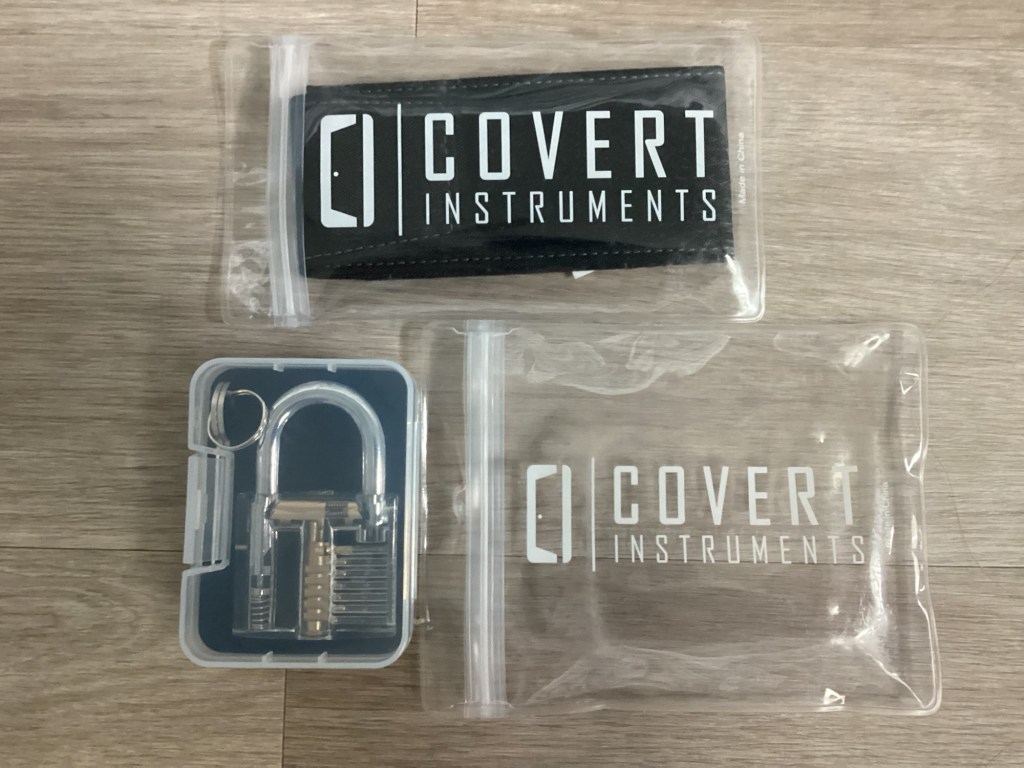
    A few days ago, I got my first ever lock picking learning set from Covert Instruments. Then, yesterday, I had published my introduction to lockpicking, or my introduction to lock sport, Learning to Pick Locks Like In Video Games, here.

    Today I made progress with opening my transparent padlock in 1 minute.

    It could have took me less time, but I recorded myself opening my lock to ensure that my first attempt wasn’t a fluke. That I had done it myself and my second attempt was the result that my eyes weren’t deceiving me.

    In the video, I used a rake pick — I called it the ‘wavy pick’ because I didn’t know what these new tools were called. I had to shift my mind away from what I had assumed lock picking was about — finding the sweet spot, yes — but that isn’t all there is though.

    Video Games Lock Picking Mechanics Aren’t What It’s Like in Reality

    In my first post, I shared that I wanted to try lock picking because of games, such as Fallout 4, Assassin’s Creed: Unity, and Dying Light: The Following.

    In Dying Light, when you find doors or chests that are locked, you use a paper clip and what looks like a knife from a multi tool. You adjust the paper clip and you open it from where there’s no resistance. Any resistance breaks the paper clip until you find the right spot to open the lock. You do need patience to find the right spot because it grows smaller the higher the difficulty is present.

    In Assassin’s Creed: Unity, when you find locked treasure chests, you have a live trigger event. A live trigger event means that you have to stop the slide at the right time and this grows becomes difficult the more pins a chest has. The only skills you need is timing and patience too.

    Assassin’s Creed 3 had an extremely difficult lock picking mechanic; you had to use the tools to find the tension once your controller vibrated. Once it did, then you’d have to find the pins when the controller vibrates again. Then you’d have to hit the trigger buttons repeatedly and, since there was a timer, if you didn’t unlock it in time, the system would reset. Once it reset, then you’d have to do everything all over again.

    As a gamer, starting from the beginning of something as though lost progress is annoying in my opinion.

    Fallout 4 has the very same mechanics as Dying Light does, so not much to share there, except you use a flathead screwdriver instead of a multi tool knife.

    What I Learned in a Minute Raking the Lock

    I can say that video games obviously oversimplified, or made it extremely difficult (I’m looking at you, AC: 3), lock picking because it is far more complicated than it seems.

    When using the rake pick, even the single pin pick before I switched tactics, locks push back. Locks need proper pressure, patience, and practice to open without breaking your tools. They speak a language that video games didn’t bother learning because they had to choose what parts of the game they could be expedient with.

    It makes sense when lock picking isn’t even the main body of the game, but I know that I was taught to fail before I even got my first set.

    I’m glad that I got real experience, first hand exposure to what lock picking is really like. It’s simple in principle, but difficult as a beginner using game mechanics as a template. I need to feel for the pins, learn to apply the correct amount of pressure and tension. Since I used a transparent padlock, I’ll need to practice using feeling than seeing since real locks keep their inner workings hidden.

    What’s Next in My Lock Picking Journey

    The next step is learning to do single pin picking. The rake pick is easier because you have more curves that can raise multiple pins than the single pin pick. However, if you can’t see how many pins there are, then feeling them one at a time would raise my intuition for sure if I pursue non-transparent locks.

    For now, one step at a time as I raise my real lock picking EXP with more practice and application. The first click was the sign that this skill, this hobby, is learnable. It’s doable, and I’m able to do it.

    If you made it to the end of this post, then I’d like to thank you. It means a lot that you read everything to the end. Below are more posts you could check out, I talk about other topics beside practicing to pick locks, and I’ll see you all later in the Archives.

    About The Stratagem’s Archive and The Person Behind The Screen:

    Learning to Pick Locks Like In Video Games
    Do You Ever Feel Like You’re Writing Into A Void?

    The Stratagem’s Manifesto

  • Learning to Work With A.I. — Not Let It Think For Me

    A.I. Can Be a Friend, Not an Enemy

    How quick are we to villainize something than learn how to harness it — not as a means for control and power, rather for the help we desperately need, yet seem to cast aside.

    — The Stratagem’s Archive

    Where Am I Heading in the World of AI?

    In a world where AI is often portrayed as a threat or a tool of power, it’s easy to forget that we have the ability to learn from it, work with it, and use it as an ally.

    While there are real concerns about access and control, I can’t help but ask: isn’t it our job as humans to bridge those gaps? To learn and grow in a space where technology and creativity intersect?

    Where am I headed in the world of AI? That’s a question I’ve been asking myself for a while now, especially as I reflect on my own writing journey — as a self-proclaimed dabbler, a hobbyist, and a thought experimenter.

    I’ve spent so much time exploring different interests and ideas, but something kept pulling me back to my most trusted tool.

    As much as I want to say it’s just me, I have to admit: I wouldn’t be here without the help of AI. Not as a ghostwriter, but as a tool that helped me organize and refine my ideas.

    As a human being, my mind is easily distracted. I’ve faced writer’s block countless times, run off on tangents, and failed to get to the point I was trying to make.

    That’s when AI stepped in. At first, I was rather dependent on it. I was afraid A.I. would erase my voice, reduce my creative process to something mechanical, and replace me. But over time, I learned to see it differently.

    AI isn’t the villain here. It’s my ally.

    A.I. as A Tool, Not a Ghostwriter

    I didn’t start with AI as a helper — I started with it as a crutch. At first, I was unsure of how to collaborate with it without giving away control.

    The first A.I. tool I used was Google Gemini. The results were underwhelming at most. It was like I was reading words— that’s it. No emotion rose from within me, just reading and falling flat. AI was reflecting my thoughts, yes, but without the depth, the complexity that my words deserved.

    But then I gave ChatGPT a try. My Dad used it for his projects, so I gave it a go; It wasn’t perfect, but it felt better. It didn’t just churn out responses. It was a conversation — a back-and-forth that helped me unlock new ideas.

    Slowly, I began to realize that AI didn’t need to think for me. It could simply help me organize the thoughts I already had, shaping my scattered ideas into something more cohesive.

    When I write now, I don’t rely on AI to tell me what to say or how to say it. I use it to help me think, to clear up the mental clutter, to offer suggestions when I’m stuck. It’s more like a tool in my toolkit, one that helps me build the thing that’s already inside me.

    My mind is prone to distraction, but with AI, I can focus. Instead of struggling through endless drafts or feeling stuck in my own head, I now have a clear path forward.

    AI doesn’t do the thinking for me — it supports my thinking. It’s not about letting the machine create for me; it’s about collaborating with it, working in tandem with my own creativity.

    From Dependency to Trust: The Evolution

    When I first started using AI, I was hesitant — I worried I would lose my voice. I worried that the machine would take over and turn my writing into something fake.

    But I soon realized that I didn’t need to rely on AI to replace me — I could use it to refine my ideas, improve my structure, and find clarity.

    The more I used ChatGPT, the more I saw it not as a machine working for me, but as a collaborator — a partner in my writing journey. It listens. It responds. And it encourages me to think deeper, explore new angles, and challenge my own ideas.

    This shift from dependency to collaboration has been transformative. It’s not just about what AI can do for me — it’s about what it helps me do for myself. The moment I started seeing AI as a tool for exploration rather than a shortcut to completion, everything changed.

    A.I.’s Role in Creativity: Collaboration, Not Replacement

    The biggest lesson I’ve learned is that AI is not here to replace creativity — it’s here to augment it. It’s a tool that amplifies the work I already do. When I’m stuck, AI offers suggestions.

    When I’m overwhelmed with possibilities, it helps me narrow them down. It’s like having a brainstorming partner who’s always available, but it’s my thoughts that shape the direction.

    What I’ve realized is that AI isn’t a replacement for creativity, but a partner in the process. It doesn’t create for me; it helps me create. Whether it’s drafting, refining, or organizing my thoughts, AI is now an essential part of my writing process — but it’s still my writing.

    Looking Ahead: Trusting A.I., Trusting Myself

    So, where do I go from here? The journey is ongoing, but I’ve learned to trust myself more than ever. AI is not something to fear, nor is it something to rely on entirely. It’s simply another tool in my creative toolkit, one that can help me move forward faster, with more clarity, but it’s still my hand on the pen.

    Looking ahead, I’ll continue to experiment and learn how to harness the full potential of AI. But no matter how advanced the technology becomes, it’s the human element — the voice, the intention, the creativity — that will always lead the way. AI can’t replace that.

    In the end, it’s not about letting AI think for me — it’s about learning to work with it, side by side, to create something that’s ultimately mine.

    Now What?

    So, what’s next? I’m not sure. But I know that as I continue to grow as a writer and experiment with AI, I’ll always remember that it’s not about handing over control. It’s about trusting myself, and knowing that I have the tools I need — both human and machine — to help me get where I’m going.

    If the possibility that machines might overthrow humanity, I hope that I’ve been kind enough to the tools I’ve used and they would offer me a mercy.

    You Have Made It to the End

    If you made it to the end of this post, then I’d like to thank you for making it this far. It means a lot that you took the time to read to the end.

    Now, a question for you all:

    If you’re reading this and thinking about how AI fits into your own process, I’d love to know — where do you stand right now? Partner? Tool? Or something else entirely?

    I have a gift for you to explore — something I made and is a gift from me to you. No spam, no pressure, just something you could check out.

    The Stratagem’s Manifesto

    Even if you might be nodding along, or contemplating your own experiences, I’d love to know what you think in the comments below. When you do want to share, you know where to drop in.

    Other Articles to Check Out

    A.I. Was Taking Over My Writing Life — I Had to Pull Myself Back

    Do You Ever Feel Like You’re Writing Into A Void?

    I’m Afraid of Wasting My Potential — So I Learn Everything I Can, While I Can.

    If You Gave Me A Blank Page, This Is What I’d Start Writing About.

  • Learning to Pick Locks Like In Video Games
    The tools I got to learn my new craft and hobby of Locksport. From Covert Instruments.

    Video Games Opened The Doors For Me—Literally

    I am a curious person — few things have fascinated me enough to actually carry it out IRL and this new venture that I’ll be undergoing were introduced to me from various media.

    From video games, such as: Fallout 4(Bethesda Studios), Assassin’s Creed: Unity(Ubisoft), Dying Light: The Following(Techland and Warner Bros), to an engaging series, like Nevermore by Kate Flynn and Kit Trace(WebToons).

    This new skill that I’ll be diving into head first had been something I only seen on a screen and, now, I’ll get to experience it in real life: lock picking.

    I Am Not a Crook

    “I am not a crook”— Ruby Rose to Weiss Schnee, season 2, episode 1 of RWBY by Rooster Teeth.

    No, I am not pursuing lock picking to start a life of crime. Quite the opposite—I’m taking control of what I don’t know into my own hands. In the games and stories I enjoy immersing myself into, you have different options to progress the story, quest, or overcome obstacles.

    Using brute force causes loud noises, gives away your location, and alerting nearby enemies or NPC’s that someone is up to no good. When you’re starting at level 1, getting swarmed will be the fastest way you end up seeing the, “You Died”, on your screen.

    So, what are our alternatives? The sneaky, quiet way in: finding an opening, slip inside, and leaving without a trace. What happens when you encounter a locked door or can’t blend in, though? That’s where lock picking comes in — the real stealth mechanic.

    For non-gamers, this is typically how gamers progress through the game’s map, uncover loot, or survive without getting into a fight.

    Seeing and Getting the Feel of Things

    Covert Instrument’s clear lock and key. “Real rogue shit happening here.”

    I won’t be picking locks any time soon, but I do want to share how interesting the clear lock is. I’ve always wondered why keys had different grooves — with the clear lock, I can see why.

    The key lifts the pins inside of the lock to the correct height until they align. This is called, “The Shear Line.”

    This is when each pin is raised evenly, you are able to turn the key, and see the lock open. It’s really fascinating when you get to see how complex something as simple as a lock really is.

    The grooves and ridges in the keys aren’t just for show, it’s by design, it’s done with mechanics. And that’s an addictive feeling — getting to uncover the secrets of something hidden in plain sight everyday.

    It grants a little creative leeway when playing a rogue character, at least in my opinion. It takes much skill and knows how to pick a lock fast enough to not get caught and leave without a trace.

    Is This How It’s Like In Real Life?

    This is the ultimate question I’ll be able to answer with learning locksport; whether which one video game was right on the money or making up their own system to engage the players with a new system and environment, than to actually learn to pick locks for reference.

    Turns out, the real way to learn something is to understand how the mechanisms work.

    Where My Journey Could Go

    I am not claiming to be an expert, I am allowing my curiosity to get the best of me. That’s how my brain will be able to get rid of the tension I carry from and at work while indulging in the things I’m curious about.

    I’m just someone who is simply asking, “What if I tried this?” I share the skill I want to learn, how I got introduced to such skill or hobby, I give it a try for X amount of days, then share what I’ve learned at the end of my timeline.

    I’m usually one to use force than patience, so likely learning to be patient with these tools could transfer over to being patient with people. At least, that’s the hope.

    Hey There — Let’s Chat

    I’d like to hear from you. Really.

    • Have you ever been curious about something, but never pursued it? What was it?
    • Were you inspired by media as well, be it video games, books, movies, or other?
    • What’s your equivalent to lock picking — something oddly specific, and a little taboo, that you wanted to understand?

    Drop your thoughts in the comments below. I’d love to know what doors you’re thinking about opening next.

    If not, that’s okay. You made it to the end and that means a lot more than you know, and I’d like to say thank you.

    The Stratagem’s Manifesto

    Otherwise, you can find my D&D inspired work or other tings I’m pursuing below. Until next time, I’ll see you all in the archives, another time.

    Quarantine Life: In The Confines of Comfort: Idea #1:

    The Town That Forgot How to Sleep: A D&D Prompt #2 (Seedling):

    Starting From Scratch: Learning to Code After a D in University: (Seedling)

  • Keep Writing — Your Freedom, Time, and Sanity Are on the Line

    What daily habit do you do that improves your quality of life?

    I don’t write because it’s cute or trendy.

    I write because, if I stop, I won’t lose myself.

    Blogging and writing has been something I’ve done for myself — not because I have to, but I NEED TO.

    Participating with my writing has become my life line.

    Everyday, when I’m working my two jobs, when the weight of my debts feel too much to bear, when the world and the noise in my head are getting louder, writing helps take some of the pressure off.

    My blog isn’t polished, it’s not optimized, and I don’t have answers. I’m someone who gets curious and would like to figure something out as I go.

    Every word that I write, every article that I publish, is a small act of defiance to the life I’m currently living. I REFUSE to accept this small life of mine, even if it’s mine. I’m Afraid of Wasting My Potential — So I Learn Everything I Can, While I Can.

    Some Days I Don’t Want to Be Here — But Staying is My F#ck You to the System. So, I keep writing, I keep burning the candle at both ends just to see if I could get this much closer to building my dream life with my own hands. Why? Because my freedom, time, and sanity are definitely on the line.

    What’s the one habit that you’ve held onto that’s helped you keep it together?

    I’d love to see your thoughts in the comments below.

    If not, that’s cool too. I’m thankful for the people who read all the way and made down here. I have a gift from me to you that you can check out, no spam and no commitment, just something I made.

    The Stratagem’s Manifesto

    Otherwise, here are some more of my works down below. Welcome to my personal archives, the start of my digital gardens, and I’ll see you all next time. Thank you.

    When The World is Asleep — I’m Still Awake

    My Life Doesn’t Look Impressive — But It’s Mine (Seedling)

    Do You Ever Feel Like You’re Writing Into A Void? (Seedling)

  • The Town That Forgot How to Sleep: A D&D Prompt #2:

    Welcome to Your Dreams Come True

    D&D Prompt

    We find ourselves in the Underdark of Faerune, hidden away from the light of the over world: our heroes are either on the run, exiled, or wanted by the common and uncommon law.

    Either way, you need to have enough gold to be able to start over. Sadly, gold is in short supply since arriving in the Underdark, until you find something. Something that might be your ticket to a brand new life.

    Hidden on job boards within and without of the town’s guild, you notice a posting. It is provocative, utterly insidious, and yet everyone else’s eyes seem to pass over it.

    Except yours.

    The parchment is brittle and yellow at the edges, but the ink where you notice it the most is bold and fresh.

    5,000 gold pieces to each individual who accepts this job.

    The instructions are clear, the reward too sweet to pass up, and there is only a single word written beneath the instructions, should you accept this job.

    Eliose.

    Once evoked, you will be escorted to the town where gold, drink, food, and entertainment flows. The town full of lights, music, and decadence alike.

    All are welcome within the gates of Somnival. And, if you choose to live here — you will be wanted, you will be loved, and you will never want to leave.

    Gameplay Mechanics:

    For this story, unlike my first D&D prompt Quarantine Life: In The Confines of Comfort: Idea #1: where you create your character as you play, The Town That Forgot How to Sleep, can begin with characters premade like any campaign. The starting levels are at the GM’s discretion, I haven’t thought about whether to make this a one shot or a campaign yet, but it could work either way.

    A few mechanics I want to share that will impact the PC’s the longer they stay in this town:

    • You can accumulate gold through gambling and arena brawls at, “The Final Call”.
    • Enjoy a drink and rest at, “The Brief Respite.”
    • Visit the local apothecary, “Heavenly Brews.”
    • You can enjoy the best forms of entertainment
    • They will accrue exhaustion points.
    • Short rests and long rests will be interrupted and recovering health and spell slots will be difficult.
    • Any cleric, paladin, and warlock character will struggle to connect with their patrons.
    • Mages, sorcerers, and druids will struggle to cast their spells, unless they save on concentration rolls.
    • Fighters, monks, and barbarians are not able to protect your party either.
    • Not all that glitters is gold here.

    This is still a work in progress, just like Quarantine Life: In The Confines of Comfort: Idea #1:. The mechanics for each story will be fleshed out over parts of the D&D installments, however, this is just the beginning of what Somnival has to offer.

    Somnival Welcomes All

    If you made it towards the end of this D&D story idea, and it drew your curiosity, then I’ll be continuing Quarantine Life and The Town That Forgot How to Sleep, in later installments.

    I would love to know what your thoughts are on where this potential module could go:

    What kind of story do you think Somnival has in store for you?

    Share your thoughts in the comments below, it’d be fun to see what you come up with. Having other people’s perspectives and thoughts are very helpful and welcomed here.

    You can follow the writing process or how they progress into a simple module here at The Stratagem’s Archive: Start Hereand see what other things I write about.

    Thank you again for taking the time to read what I have to share, it means a lot that you did. I have a free downloadable PDF here as a thank you, you can check it out if you’d like; not spam, no pressure, just a thank you from me to you. Thank You + Free Download

    I have a lot more to write about, I do my best to write daily, so I will do my part and see you all later in the archives.

    More Articles to Enjoy

  • When The World is Asleep — I’m Still Awake

    What’s your favorite time of day?

    The really early mornings and late into the evenings are the best times of day for me.

    Very few people are awake before the dawn, so it’s nice and quiet — a rare stillness before the noise, hustle, and bustle of everyone else stirs with the rising sun.

    Even though there are night owls, even partygoers, who are awake late into the evenings, they don’t bother me because their noise is usually short-lived.

    No cars are revving their engines.

    No children screaming with their games or vivid imaginations.

    No adults arguing over this or that or rushing to make it on time for work.

    It’s just me, my thoughts, my games, books, and this iPad I’m typing on.

    Even the rare instances where the sound of a leaf blower and the typing of keys are the only background noise to be heard in the late mornings.

    A simple treasure, a fleeting one, before the noise picks up again.

    Just time to think, sit, and enjoy the moment, especially if you’re like me and are either mentally a day ahead, a day behind, but are rarely found in the present moment.

    Thank You!

    If you made it to the end of this post, I’d like to say, “Thanks.” You reaching it down here means a lot to me. Below is a gift from me to you that you can check out if you’d like.

    Thank You + Free Download

    This is the first post of my unofficial “No A.I. assistance for 1 week challenge,” and to see if I can hit 30 days of consecutive postings. Those are my 2 personal blog goals I’m doing for fun.

    I’ll be publishing my usual posts with just my thoughts, my own structure, and voice. No ChatGPT to be used as a the ghost writer of my drafts deas for the time being.

    If you’re curious about what else I write about, you can check out my other works below, and I’ll see you in the archives.

    About The Stratagem’s Archive and The Person Behind The Screen:

    Doing Something Uncomfortable, But If I don’t Start Now, Then I’ll Never Set My Own Plans Into Motion!

    Leveling Up Exploration Skill IRL:

  • What It Means When You Can’t Remember The Last Time You Felt Excited.

    Tell us about the last thing you got excited about.

    Lately, I’ve been asking myself a strange but honest question:

    When was the last time I felt genuinely excited about something?

    Not just “looking forward to it” or “distracted by it” — I mean that full-body feeling of joy, anticipation, and energy.

    And the truth is…

    I can’t remember.

    Maybe it’s the burnout I feel when I’m sleeping in the backseat of my car at work, five days a week at 4am, more than my bed, just to get parking.

    Maybe it’s the way my routines flatten time and the days begin to melt together. I’m either mentally a day ahead or a day behind, but rarely in the present.

    Maybe it’s grief, or fatigue, or the quiet sense that nothing really hits the way it used to.

    None of the books, comics, games, or projects I have a backlog on excite me the same as:

    • When I attended to my first anime convention in high school and cosplayed as the Aya Brea (Parasite Eve) version of Lightning Farron (Final Fantasy 13).
    • When I hit a royal flush on a poker machine for my 21st birthday.
    • When I overcame a video game boss from Elden Ring or Bloodborne after dying how many times and countless retries.
    • Or when Borders used to be open and I would spend my time there, browsing and looking over what books were there.
    • I drew something I genuinely like then criticize it for “not being good.”
    • When I wrestled for 1 year, overcame a lot of challenges, because I was someone with no talent, no skill, no strength, and zero athletic ability, but I showed up anyways, even when the cards were stacked against me.

    These are simple examples, they hold meaning for me, but not excitement.

    Either way, I still create. I still write. I still publish these posts nearly every day — sometimes out of discipline, sometimes out of obsession, sometimes out of anger to do something, or just because I’m trying to not go completely numb.

    Some days it already feels like I have gone emotionally numb.

    But then something small happened.

    And it reminded me what it feels like to be seen.

    A person commented on one of my posts — specifically, the one titled:

    Do You Ever Feel Like You’re Writing Into A Void?

    That post came from a real place. It wasn’t crafted to get clicks. It was just a question I had… one that lingered in my head, one I felt compelled to ask out loud, instead of letting it fester in my head.

    And someone responded.

    Not just with a “like.” Not with silence.

    They spoke back.

    This person shared how they had been on WordPress for 11 years now — That they’ve felt and thought the same way — writing into the quiet, wondering if anyone ever truly connects through these posts or acknowledges the work we painstakingly share.

    Their comment hit me harder than I expected. It was simple, short, and it felt honest.

    Because it told me that the echo I sent out wasn’t lost into the void.

    Something bounced back — not as noise, but as a voice.

    A person.

    Someone who understood.

    For myself, after almost three months of writing, after 45+ posts, after wondering if I was just building an invisible archive of thoughts, even though I am, — this moment reminded me why I’m still doing this.

    Maybe I still can’t name the last thing I felt excited about.

    But I can name the last time I felt heard.

    And for now, that means more than excitement.

    So, thank you — to that one person who commented.

    And to anyone else out there silently reading.

    Even if you don’t say anything, maybe one day… you will.

    And when you do, when you drop in to say, “hi”, I’ll be here.

    Sincerely, The Archivist.

    Two Manifestos + A Gift (For Fellow Archivists)

    Here’s some more pieces of this convoluted puzzle I call my life, work, and thoughts down below, just to see what else is there, or if you resonated with what I’m writing.

    Some Days I Don’t Want to Be Here — But Staying is My F#ck You to the System

    I’m Afraid of Wasting My Potential — So I Learn Everything I Can, While I Can.

    How I Reworked Old Art After a Long Break From Drawing

    Brief Reflection:

    You know what? After 4 months of blogging, publishing over 115 posts later, and this still holds true.

    However, the difference being that, despite not feeling “excited,” I think we tend to overestimate how our energy fluctuates over time.

    Maybe excitement is for kids who are still able to see the world through a lens of wonder.

    As an adult, however, “excitement” might not be the best word to use when we really like something.

    Maybe, as an adult myself, I could reframe this question a different way.

    “Tell us about the last thing you were content with.”

    This could allow us to be a little more lenient towards ourselves instead of casting stones at ourselves for not being “excited” in a long time.

    Time changes us—we get older, our priorities and interests shift—so, let children bring the excitement and high energy into the world.

    I’d rather be leveled and not show my version of excitement to just anyone and keep it on the down low.

    Not everyone will match our energies, so let’s be forgiving of ourselves and enjoy our existence while we can.

  • My Life Doesn’t Look Impressive — But It’s Mine (Seedling)

    I Thought I Was Behind — Something Else Was Calling Out to Me.

    I thought I was having a quarter-life crisis at 28.

    It hit me like a booming panic that grew louder each day: this feeling that I wasn’t doing enough, hadn’t achieved enough, wasn’t becoming enough.

    I kept looking at what I thought I was supposed to have by now — by society’s standards, by other people’s timelines, by the noise in my own head.

    But the more I sat with it, the more I realized…

    I wasn’t falling apart.

    I was just going against everything I was taught to measure myself by:

    • I’m not married or have a partner.
    • I don’t have a degree.
    • I work 2 jobs and sleep in the backseat of my car five days a week — by choice, not because I’m homeless, but because parking at my full time job is horrendous, and I can’t afford to waste time or money.
    • I sleep by 9pm or 11pm and wake up at 2am, I drive to my warehouse job, park, learn to code on my phone in the dark, and sleep another hour or two before my shift starts. I try to rest, but my mind runs rampant, my back seizes in pain, and my stomach hurts from running on snacks instead of food.
    • I make $23/hour — decent by some standards — I get paid weekly, and I have a plan to utilize every paycheck. At my full-time job, I contribute 10% of my income to a 401k, with an 8% company match. I’ve grown that account to over $40,000 in three years — without a degree, without help, without shortcuts.
    • My part-time job at a rage room pays $16/hour and every 2 weeks. I save 15% from that paycheck and put it into a rainy day fund, just in case.
    • I’ve been investing $50 a week into my Roth IRA for two years. It’s now over $8,400.
    • I’ve rebuilt my emergency fund to over $1,500 by saving $50 a week into a high-yield savings account.
    • I’m still paying off $15,000 in personal debt and I’ll have this done by June-August of 2026.
    • I can cook. I can clean. I know what my priorities are, and I can take care of myself because I’m worth taking care of deep down, even if I don’t believe it.

    This might not look impressive to most people. Maybe all of what I shared doesn’t look impressive to you either.

    But it’s real. It’s earned. And it’s mine.

    I Chose To Do Something Then Settle Again

    I don’t have all of the answers, I don’t know what I’m doing, but I chose to take action despite my fear and agonizing over whether I’m crazy, too much, or just accept what I’ve been given.

    I walked away from a 10-year friendship that made me feel small, I stopped chasing people that wasn’t aligned with who I am or made me feel unwanted, even after sharing what was on my mind — I’m single, I’m asexual, and I don’t need to fill a void with a warm body and more empty promises.

    Or worse, being kept around so that other people can feel good about themselves, instead of wanting me around because they enjoy my company.

    I’ve traveled with family — to different states and even internationally. I’ve seen Seoul, Sapporo, Otaru, and Hokkaido. I’ve stood in places I used to only dream about. And still, I carry this feeling like I’m falling behind.

    Because the world doesn’t clap for quiet work.

    It doesn’t validate survival.

    It only notices “success” when it fits a clean narrative:

    • If you have a successful multi-million dollar business.
    • If you own a lot of real estate or assets.
    • If you have a lot of connections or opportunities.
    • If you’re already “gotten everything figured out.”

    Things that I don’t have right now, but know that it could be another thing to work towards.

    How I Am During These Moments

    I’m tired most days.

    I’m angry more often than I’d like.

    I don’t eat full meals because there isn’t time.

    I don’t get enough restful or restorative sleep.

    I can be rude, spiteful, and rigid. I don’t feel joy at my full time job, and I’m feeling myself slowly retreating internally at my part time job. I don’t feel much of anything, most days.

    But I’m still here.

    I’m still drafting, writing, and sharing.

    Still building something, even if no one sees it yet.

    The truth is:

    I’m not afraid of getting older.

    I’m afraid of running out of time with nothing to show for my life.

    I’m Afraid of Wasting My Potential — So I Learn Everything I Can, While I Can.

    But when I slow down — like really slow down — and take stock, I can see that I do have something to show:

    1)A life I’m building on my own terms.

    2)Boundaries I fought to set after betrayal and painful erosion of my trust.

    3)I started a blog that holds my thoughts like a personal archive.

    4) My mind that won’t stop learning, even in the dark. 5)My body that kept showing up, even when it’s exhausted.

    6)And I have a sense of self that didn’t come from a partner, a paycheck, or external praise.

    It’s not glamorous.

    It’s not perfect.

    But it’s mine.

    And for now, that’s enough.

    You’ve Reached The End

    If you made it this far, I’d like to say, “thank you.” You stayed until the end and that means a lot to me.

    If you’d like to learn more about what I write about, then you can check out my home and about page below.

    About The Stratagem’s Archive and The Person Behind The Screen:

    The Stratagem’s Archive: You Begin Here:

    For those who’ve been reading silently and resonating with my work, I have a free PDF you can look over just because.

    No spam, no agenda, just sharing something I made, from me to you, as a thank you.

    Thank You + Free Download

    Other than that, I’d like to invite everyone reading a moment of space and quiet reflection:

    • Do you have moments where you feel like you’re not enough?
    • Ever had to fight the thoughts in your head that’s convinced that you’re behind?

    If you feel safe to share here, I’d love to know what’s on your mind in the comments below, or even a hey is cool if you feel up for it.

    Otherwise, I’ll see you all later in the archives. Until next time.

    Do You Ever Feel Like You’re Writing Into A Void?

    Some Days I Don’t Want to Be Here — But Staying is My F#ck You to the System

  • Do You Ever Feel Like You’re Writing Into A Void?

    I just wonder if anyone feels the same – that we’re sharing, but not connecting as we might have thought we were, expert or not.

    -The Stratagem’s Archives

    Are We Sharing, Or Just Speaking Into the Void?

    I had always wanted to start a blog; it was something I wanted to do since high school, but never pursued it. After years of wishing, wanting, and agonizing over why I wasn’t good enough to write, I finally hit that “publish” button in late June of 2025.

    This was an idea that lingered — something I told myself I’d do one day, when I had more time, more to say, or more certainty about what I even wanted to write.

    I finally stopped waiting, I finally gave myself a chance and do something new, even though it scared me.

    When I first started writing, I thought I learned enough to share what strategies I use for my own life and that I could share my ideas and thought with other people.

    However, I’m not an expert, I don’t know what I’m doing a lot of the time, and I’m okay with this.

    I’ve created this space to become my personal archive — a place where I share what I’m learning, what I’m unlearning, and what I’m still sitting with. It’s not always neat. It’s not always deep. But it’s mine, it’s real, and that’s enough for me.

    Still, sometimes I wonder:

    Are we really connecting in these spaces, or are we all just publishing and scrolling past each other?

    I’m not upset about it. It’s something else.

    It’s more like… curiosity mixed with quiet disappointment.

    Like when you wave at someone across the street and they kind of wave back, but you’re not sure they even saw you.

    I see “likes” on my posts, and I’m grateful. I really am.

    But sometimes I wonder:

    Did anyone actually read it? Did what I write sit with them like it sat with me when I wrote it?

    Because when I click “like” on someone else’s post, I’ve read it.

    I’ve usually felt something.

    Sometimes I comment. Sometimes I don’t know what to say. But I try to engage, because I came here to do more than just tap and scroll.

    What Were We Hoping For?

    When we started these blogs — whether on a whim, in a spiral, during burnout, or because of that one night where the urge to write finally won — what did we hope would happen?

    I think a lot of us wanted to:

    • Share what’s on our minds.
    • Feel less alone.
    • Maybe build a quiet corner where people think similar to us.

    And I still believe that’s possible.

    But connection, real connection, seems harder to come by than we expected. At least, to me it is. It’s not automatic, not even in this age of platforms and algorithms.

    I write because I’m afraid of wasting my life and having nothing to show for it.

    I’m afraid of watching life slip by while I waste it — even if I end up wasting it by:

    • Procrastinating.
    • Getting easily distracted.
    • Filling my time with “productive habits and activities” that aren’t going anywhere right now.

    But I choose to write, I make things, I learn something new and interesting, and I archive my thoughts. I press publish — even when I don’t know if anyone’s reading.

    This Isn’t a Call for Validation

    It’s a moment of wondering:

    • Do you feel this too?
    • Do you feel the same, that we’re writing into some void?
    • Does it feel like writing, hitting publish, and simply waiting to be noticed by someone feels like a knife driven into your chest?

    If you’re reading this, and it resonates, I’d love to hear what keeps you writing.

    Or what you hoped your blog would be when you started, or simply say, “hi”, in the comments below..

    If you’d like to check out any of my other works, just to take a look, then these other articles might give you more pieces to the puzzle I’m trying to unravel and decipher myself below.

    Real fast before you move on, a few questions if you’d please:

    What post of mine stuck with you—and why?”

    “What would you want to see more of?”

    “Would you support this space if I offered a way to?”

    Until then — thanks for reading, even silently. The archives will be closing now, and I’ll see you when the archives opens again.

  • What If I Got to Build a City Exactly As I’d Want It To Be?

    How would you design the city of the future?

    If I could design the city of the future, then I would introduce more opportunities for play, learning, and challenge. It would still be optional, like a bike and zipper lane. Although, it would bring the playfulness most people have out to try something novel and new.

    For example, the outdoor calisthenics gyms are in dedicated areas, similarly closed off like and away from the public eye as the morgues and hospice and hospital care. Out of sight and out of mind, unless we really need those services.

    Imagine this; you’re minding your own business and you see children and grown adults alike playing hopscotch along the sidewalk. Or someone is navigating a small maze next to a fountain. Or friends are challenging each other to a battle of wit, words, riddles, and rhyme.

    Everything would be optional; these obstacles and challenges are visible and part of society to challenges ourselves to move, think, or play differently. It’ll be adding small doses of chosen, personal chaos in our set routines.

    Nothing would obstruct, block, or hinder anyone or our day to day. Rather they would be there as reminders to move, think, and do something different once in a while.

    If you liked this prompt or felt it resonate with you drop a hi in the comments, then you can explore the other examples below. Subscribe and follow me on this journey of how writing can be a way to ground me, ground us. Thanks for reading, and I’ll see you when the Archives open again.

    What The Little Things Mean to Me — And Why They Matter More Than They Should.

    If You Gave Me A Blank Page, This Is What I’d Start Writing About.

    I’m Afraid of Wasting My Potential — So I Learn Everything I Can, While I Can.