Category: blogging

  • Learning Procreate Without a Curriculum: What I’ve Learned, What I Don’t Know Yet

    Note To Know:

    This isn’t a tutorial.

    This isn’t advice.

    This is a checkpoint — a record of what returning to art looks like for me right now after stepping away for years.

    Why I Chose Procreate Over Every Other App

    So, my coworker uses Procreate for her business. She has her own online store, she’s had it for over a decade, and it’s the program she uses to import and export files from the designers she works with. 

    She’s not an artist, she’s more technical than artistic, and that’s fine. 

    Procreate was a program I had used before, and it took away my exhausted decision fatigue to pick a different, “5.0/5.0 ratings, millions of users trust this app, use this app for it’ll be the only thing you need,” program I knew nothing about.

    I’ve already made several sketches after making showing my coworker my design. They’re simple, but functional for my current skill set, and I’m okay with that. 

    Even though my sketches are simple, I kept drawing different things, taking various inspirations or turning thoughts into images, to measure whether or not artistic progress was still doable after time away.

    I’ve Been Drawing For Days to See If Progress Exists in My Late 20’s

    It’s been more than a decade since I last picked up Procreate; the last time I used Procreate had been in University when I had thought that digital sketching wasn’t going to be any better than traditional art—drawing with paper and mechanical pencils— and I was trying out a new app.

    I learned very quickly that using a screen meant that my work wouldn’t have to be smeared by my clammy hands, nor would I need to worry about buying 120+ colored pencils of the rainbow that would cost me an arm and a leg to get.

    I liked making things, but I didn’t want to use my money and become the stereotypical “starving artist” cliche who would die for her art.

    I’m good.

    I’ve mentioned in another article that I picked up Procreate because of an artistic request from work

    and I took up the challenge to:

    1. See where my skills had atrophied.
    2. If I could make something good after a long hiatus.
    3. And to help my coworker out because she asked.

    Full Disclaimer: I wasn’t commissioned, I wasn’t consulting someone on how to draw, I was asked to help with a style design and made my own design from the parameters she showed me after working.

    Technically—this was unpaid— but I agreed to help, knowing my current skills, gaps, and expectations. 

    Making anything and keeping it as a means of, “Hey, I made something after years away, and I don’t hate it outright,” is better than, “I’ll never pick up X because its been too long.”

    “My Wallet, My Say!” After a different coworker told me how to use my money, but without yelling or flipping her off.
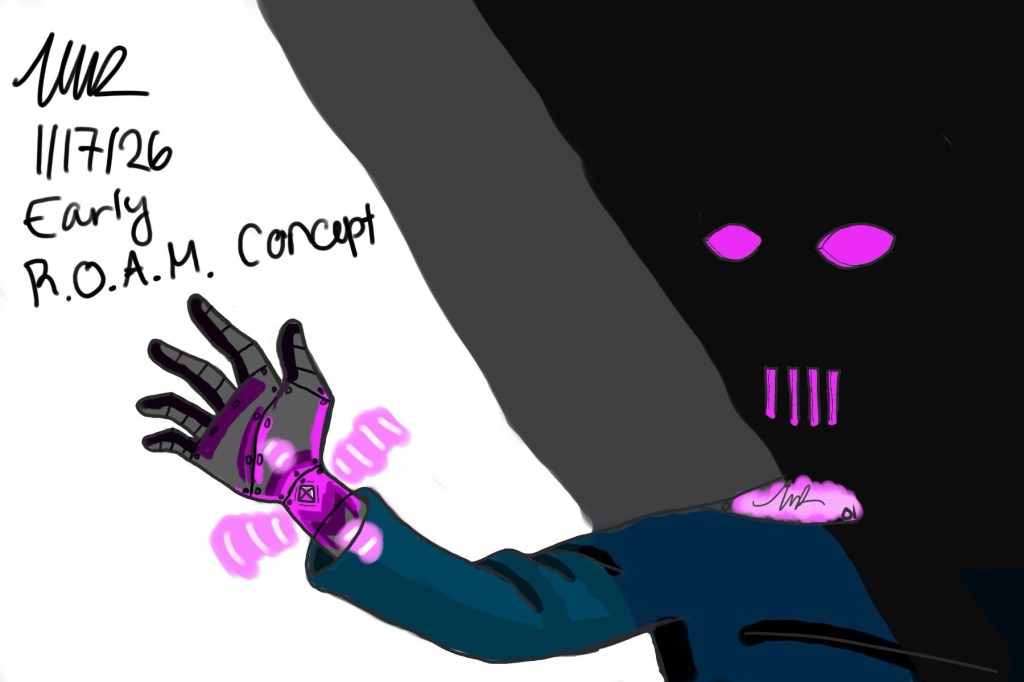
    .Early R.O.A.M. (Golem) Design for D&D Story & Concept Idea
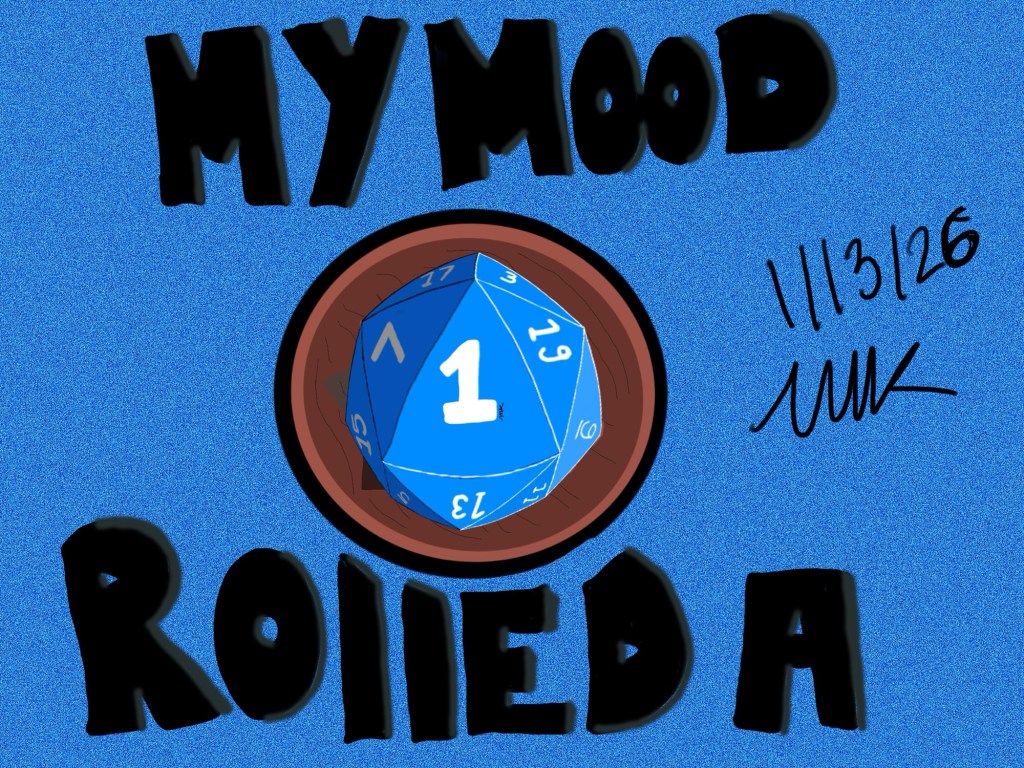
    My Dice Tray and D20 as a Potential Sticker or Mug Design
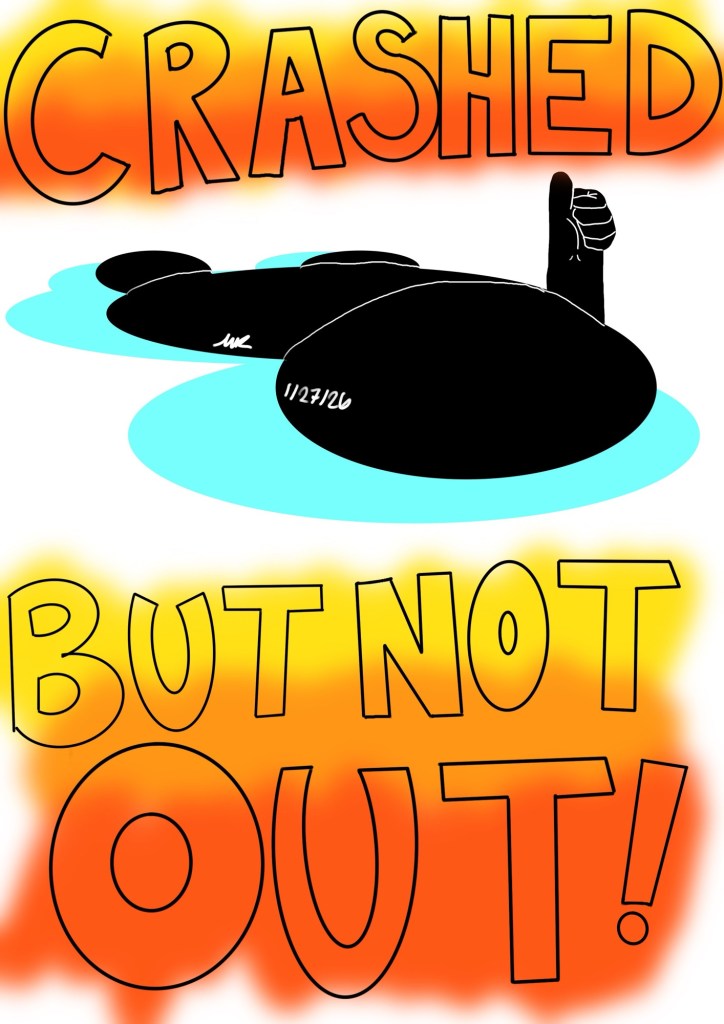
    My favorite so far; for whenever Life knocks me on my face everyday

    An Archive of Proof; Not A Gallery Exhibition 

    You know, even after days later of sketching and making things on Procreate, my mind kept telling me this same phrases over and over again when I returned to drawing;

    You’re not good enough.

    That same phrase had kept me from pursuing a lot of things because I kept comparing my work and skills to people who were far ahead of me.

    Comparison is cruel; it’s a knife that I kept turning onto myself often and I had thought about putting my stylus away.

    Even though I could make things other people said were nice to look at, I didn’t believe I was good enough to keep up the practice.

    That was the trap that I had to rewrite.

    It was simple a simple idea to try, but it wasn’t easy to overwrite years of being told that:

    1. Art can’t pay bills.
    2. You don’t know how to draw.
    3. You suck.

    Or well meaning things, like:

    1. You should make your own comics/animation/game/etc.
    2. Join a production.
    3. Go to school to learn more.

    Those were just as damning because I was no closer to being the next best animator or part of a AAA gaming company.

    Though, a different approach had to take this comparison’s place.

    Instead of creating things and showcasing them like it’s a gallery exhibition, I started making things as archives of proof that I could make and finish projects.

    Let Me Show You What I Don’t Know

    If you look at the examples of the illustrations I’ve provided, then maybe you can visually see where my skills are at.

    I don’t know how to use color palettes, I don’t know how lighting works, I try to use real life objects as my references (for example: my dice tray and 20 sided die), but shapes and line consistency were also a struggle, I have no clue how perspective works, and I have no idea how to make things look like neon signs.

    That’s okay. 

    This is my returning point, not my highlight reel; no one asked me to make the sketches after my coworker’s request, I wasn’t being commissioned, and I’m not trying to “make it big” in an overly saturated creative market. 

    Sure, I made a Ko-fi account—the sketches provided here are what I’ve posted there along side my D&D ideas—but I wasn’t looking to monetize my work. 

    I have misunderstood many things in my life, Ko-fi being another thing to my list, but I learned that trying to force myself to rush and play catch up with other people’s highlight reels poisoned my work.

    It’s a difficult thing to admit that I’m unfinished, but done is better than perfect or impressive.

    If people like the simplicity, gallows humor, and functionality of my sketches, then by all means, thank you.

    Regardless, I’ll keep on making things, just like how I run this blog: on my own, in the quiet hours of the night, when everyone else is asleep and my mind is running rampant, sometimes the things that come to mind provide enough inspiration to try out a new pen, color wheel, or even learn how to make actual shapes without free handing it.

    This isn’t a comeback story.

    It’s a marker — proof that I returned, even quietly.

    Explore The Archives

  • How I Prepare for Strength Training at Home After Manual Labor Shifts

    280+ Weeks of Experimenting, Adapting, and Improvised Movement

    If you’re trying to strength train at home while dealing with shoulder pain, bad knees, or lower back tension from work, your warm-up matters more than your workout.

    I’ve been training at home for over 280 weeks after repeated overuse injuries from manual labor jobs. This is the diagnostic warm-up I use before lifting sandbags, bands, or bodyweight so I can train consistently without making those injuries worse.

    Before Continuing

    In my entirety of writing about my Chaotic Life Strong personal training philosophy and regimen, especially in my Fitness Built For Real Life, By Real Life page, I want to make sure that I keep some truths at the forefront of this video demonstration before we continue:

    1. I am not a certified personal trainer; I don’t have credentials, a clientele, nor a degree in kinesiology, nutrition, or sports science.
    2. What is shown here has been roughly the culmination of 280+ weeks of trial and error and learning from multiple sources to have created my own hybrid process.
    3. How I train is rarely, if at all, documented; unless I’m performing any new exercises and need a visual cue to keep myself accountable. Else, those documented videos aren’t always kept for long.
    4. Everything shown is personal; it works for me, it works with my constraints: my energy, mood, and if I’m up to training the day of. 

    Nothing here is prescriptive, it’s not comprehensive, but if something catches your eye, you want to give it a try, or you don’t want to—it is fine either way.

    The work exists regardless. 

    I just wanted to share my process, why I chose to develop it the way it became now, and not let my hard won insights exist only in my head.

    How I Warm Up

    How I Train in My Little Studio Set Up

    Why I Warm Up Before Strength Training at Home

    My warm-up is diagnostic, not just preparatory. It ensures:

    • My body is ready for multi-planar movement and weighted training.

    • I’m not feeling tension, soreness, or discomfort in sensitive areas.

    • I protect areas prone to injury: shoulders, knees, lower back.

    Common Warm-Up Movements I Use

    • Cat-Cow, Upward & Downward Dog

    • Cossack Squats & Middle Split Progressions

    • Body Twists, Spinal Rotations, Arm Circles

    • Foam Rolling & Mobility Flows, Band Work

    • Animal Flows: Monkey, Crab, Tiger Walks

    These movements are staples for me. I modify or skip exercises depending on my energy, mood, and any lingering aches.

    Especially, in areas where I’ve been injured:

    • Shoulder.
    • Knees.
    • Lower back. 

    These are sensitive areas for me due to being inattentive, from compounding overuse injuries at my jobs, and persistent bad habits at home. 

    I took advice from my dad and previous bosses seriously: engage your core to prevent overcompensation.

    Applying this consistently has reduced chronic pain and made me more aware of how my body moves.

    This warm-up reflects how I train overall: adaptable, responsive, and built around listening rather than forcing.

    What This Is—and Isn’t

    This is my main example of what kind of fitness I train and how it has helped me prepare for longevity instead of chasing goals I don’t personally care for. 

    I’m not making this into a part of many videos; I’m not gatekeeping my training, I’m not hiding “my secrets” behind a paywall, I’m merely sharing something I’ve developed over 5 years because I’ve found something that works for me and my imperfect conditions.

    Just like my Chaotic Life Strong Exercise Flows PDFs:, you can try out what I’ve shared, take what you find useful, adapt it to your situation, or ignore this entirely. 

    How you choose to fitness is up to you, but I’d rather chase being able to bear hug and lift people in my 80’s than live in a broken body at 30.

    Explore The Archives

    Gifts From The Archives

    If you haven’t checked them out already, below are my PDF manifestos:

  • The Stratagems Archive Is an Ongoing Experiment (and It Lives on Ko-fi)

    Separating Thinking and Doing With Different Platforms

    The Stratagem’s Archive didn’t start out to be a business or a promotional thing. 

    The Archives started out as a pressure valve—to get the backlog of thoughts out of my head and avoid rotting me from the inside out.

    During a new point in my day, I was led to explore another platform:

    Ko-fi.

    I made a Ko-fi account on a whim—even made a business PayPal account to keep my anonymity, to feel like I’m making progress in my life.

    Making a Ko-fi account gave me a few questions I wanted to answer:

    • Could external support be possible for the archives if presented?
    • What would I do with this Ko-fi account?

    I chose to separate my creative endeavors—my sketches and expanded D&D content and artistic learning curves—from my thinking out loud writing that exists on my blog.

    It wasn’t as easy a decision for me to make because I thought Ko-fi was a social media account. I still don’t have social media; however, Ko-fi gets discovered through social sharing.

    Thus came my third question to answer; 

    • Could The Archives on Ko-fi be found organically?

    That’s what I’ve been trying to figure out for the last 2 weeks now. I wanted to share that The Archives are slowly expanding and so are my personal skills.

    How My Ko-fi Account Was Really Born

    I’ve been recently presented with an opportunity to tap into my creativity, and I don’t know how to feel about it.

    A coworker showed me a design that looked uneven, she was struggling to adjust it because she’s not used to drawing, and asked if I could help.

    Granted, I told my coworker that I haven’t made anything in years—I’ve mostly drew with paper, colored pencils, and a 0.5mm mechanical pencil—and it had been just as long since I drew digitally on my iPad using Procreate. 

    My artistic skills were rusty and severely lacking; I never formally or informally learned to draw, but I was willing to take up the challenge of helping my coworker out.

    She forgot to send me her blueprints for what she wanted, but I went off of memory and made my own similar design.

    I liked how it came out. 

    My very first illustration of the new year. “A Shaka For a Friend.”

    It was simple, the colors surprisingly popped, it took me 2 days to clean up, but the design was initially completed in 30-40 minutes.

    My coworker was the first person, outside of family and polite acquaintances, who liked my work. I felt a small spark of happiness I thought was dead for years.

    How This Opportunity Gave Me Options to Explore

    My coworker has had her own online business for more than 10 years and she told me that some businesses were looking for designers to make things for them.

    She admitted that she pays $400+ per design she likes and she was looking for a new permanent designer to work with her. My brain perked up.

    Did I volunteer to be her new designer?

    Nope.

    I know my skills aren’t very professional, they’re very basic, and I’m still learning to use Procreate.

    I’ve seen what kinds of things she has in her online store and I definitely am not the best fit for her.

    Instead, I chose to showcase my work online, much like my blog and my writing, just to show it exists.

    I’m not officially building a portfolio; I’m not actively looking to become a graphic designer; I’m not trying to make Ko-fi the thing that gets me out of my current jobs financially or schedule wise.

    I figured Ko-fi was the best place to explore and share the things I’m making online. In my opinion, Ko-fi is like Fiverr, but for very creative minds and works of various art, skills, and knowledge. 

    Both WordPress/Jetpack and Ko-fi are the same containers:

    The work exists; “If my work helped you feel less alone, this helps me keep making it.”

    This space exists because I keep showing up to it.

    Explore The Archives Here

  • Why The Stratagem’s Manifesto 1.1 Exists (and What It Means for Me, and Maybe You)

    Manifesto 1.1 is an Extension, Not a Remake of 1.0

    I’ve been working on this quietly for some time. My PDFs, my manifestos, the book project that I shelved for the seventh time—they’ve mostly existed in the background, supported by my own effort, time, and energy.

    I haven’t relied on anyone else to keep them alive, not from pride, just that this matters to me. And that’s been fine on its own.

    But Manifesto 1.1 is Different.

    It isn’t more polished than 1.0. It isn’t inspiring or comforting. It doesn’t promise answers or solutions or a system. It feels grittier compared to Manifesto 1.0. And it isn’t an upgrade in confidence—it’s an upgrade in honesty.

    Manifesto 1.1 exists because I reached the edge of my endurance.

    Because I realized that surviving, showing up, keeping going—that alone wasn’t enough. I wanted to mark that reality. I wanted to name it.

    And I wanted to test something new: could honesty exist in the wild, outside of my own labor, and be supported by the people who resonate with it? 

    That’s all.

    Nothing more.

    No promise.

    No guide.

    Just a marker— a small experiment in trust and audience connection.

    The pay-what-you-want model with Ko-fi isn’t about money.

    It’s about seeing if people will engage with something that doesn’t instruct, sell hope, or claim mastery.

    It’s about creating a space for recognition without performance.

    I Don’t Know What Will Come of This.

    Maybe it resonates. 

    Maybe it doesn’t. 

    Maybe no one contributes. 

    Maybe someone does. 

    None of that changes the work itself.

    The realizations I wrote, the marker I laid down—it stands on its own.

    This is the first time I’ve tried this. And I wanted to share it because it matters to me to document it, even if the results are quiet. 

    Even if it lands in unexpected ways. 

    Even if the impact is invisible.

    So, Manifesto 1.1 exists. It marks a moment. It tests boundaries. And it reminds me—reminds anyone who reads it—that endurance isn’t enough, honesty is necessary, and showing up counts, even if it doesn’t move the world.

    A Note on Manifesto 1.1

    This PDF is a continuation of Manifesto 1.0 — a record of my reflections and realizations as I navigated endurance, constraint, and stagnation.

    It doesn’t promise solutions or hope. It’s a little grittier, a little rawer, because it names the limits of surviving and enduring for long stretches of time.

    “This is the artifact. It marks a moment. Support is optional. Thank you all the same.”

    If You Made It to the End

    If this PDF or reflection helped you, you can support the archive or grab a small sticker on Ko-fi — optional.

    Explore The Archives

    Below are my other artifacts you can explore freely here on this blog to compare how Manifesto 1.1 evolved from previous manifestos.

    Note:

    The experiment with Ko-fi didn’t fail, I rushed to do this experiment. I figured I had spent enough time online—writing, Canva, Procreate, everything—thinking 7 months later would allow me to try new things and seeing if writing honestly and producing a means to support the archives could co-exist.

    More than a week later, after I made my Ko-fi account, I wasn’t doing much with it. Once I’m able to create enough evidence for myself, make 2 artifacts outside of my PDFs that could be valuable to someone else, then I’ll come back to seeing how to support the archives outside of my own efforts again.

  • Could We Talk About Little Habits We Picked Up From Somewhere and Kept Them Going?

    How a Marine Biology Student Gave Me a 10 Year Old Habit

    Back when I was starting university in August of 2015, I remember sitting in my Communications 101 class, with a professor that was close to retiring that he was pretty lax and was ready to yeet himself out the door, listening to my classmates do presentations.

    One after another, I was bored out of my mind waiting for class to finish so I could go to my dorm to play Vain Glory, this was the Korean equivalent of League of Legends, except one presentation stood out to me that day.

    I remember he was a tall skinny Asian local boy born and raised in the same state as me, except he was a Marine Biology student, whereas I was in Engineering at the time.

    So, there’s a lot of trash and pollution in our oceans and our economy is especially dependent on the ocean for food and for our tourism sights. This Marine Major brought a plastic straw sleeve and a picture of a fish to demonstrate that a lot of fish are found dead because they swallow debris believing it’s food.

    Anyways, the boy demonstrated for his presentation that, if we were to tie the straw covers, then even if a fish swallowed a straw sleeve, the knot would still allow room for water, food, and oxygen to enter through the fish’s maw.

    Therefore, preventing them from getting dying prematurely outside getting caught by hooks and nets and yanked out of the water.

    Why Are You Telling This Story?

    I’m sharing this story because, a decade later, I’m still tying little knots in whatever I can get my hands on because of this boy’s presentation.

    Why did I keep this up?

    That’s a great question!

    I don’t know why.

    I can’t remember why the presentation convinced 19 year old me to make tying knots in plastic my 29 year old self’s new compulsive habit. Yes, it’s compulsive because my brain won’t let me eat in peace or leave the table until I tied a knot in my straw covers or chopstick sleeve, despite them being wrapped in paper.

    Yet, she never got social confirmation that reinforced this habit, nor feedback that this habit of hers was helping.

    It became something she did, that I do, even when meaning is lost.

  • Oh, Ho, Ho, Ho, No! The Christmas Tree From October Came Back: Time For Panic Reflecting and Things I’ve Learned in 2025

    It Was Signaling The Beginning of An Inevitable End

    That Christmas tree I saw at work back in October was a menace. We didn’t get to Halloween or Thanksgiving when it came through on the conveyor belt and, once it was sorted and shipped to wherever it needed to go, it was out of sight and out of mind.

    This was when I talked about having, One Foot in the Grave and a Christmas Tree in My Face

    Good times. Good times.

    Now, that damn inflatable Christmas tree returned with a vengeance.

    And it brought friends….

    • Existential dread.
    • Time blindness.
    • Another year is ending.
    • WHERE DID THE TIME GO!?!? Panic mode activated.

    And that was only the beginning of my stomach dropping.

     I started seeing reindeer antlers on cars; Nightmare Before Christmas decorations strung up at people’s houses; Christmas carols blasting in the stores on constant loop from hell; and crowds of people scrambling to do their Christmas shopping. I’ll be at the store picking up broccoli and distilled white vinegar and end up thinking, what the fuck have I been doing in 2025? 

    Though I usually wait until I get home to spiral out of my mind. I don’t need to embarrass myself further in public for not having any “cheer” in my body, much less about dreading the new year drop kicking its way in soon.

    Reflecting Without Spiraling: Anything Worth Patting Myself on the Back For?

    This is a legitimate question—not just for shits and giggles. I personally struggle with accomplishments and recognition, even from personal achievements.

    I NEED to see whether or not my life moved a little away from previous years, else my feedback loop from Hell will scoff and mutter, loser, under its breath.

    So, Fellow Archivists, let’s review what we’ve been doing throughout 2025 together. Silently for you guys, unless you want to share, but publicly for me.

    Let’s Count What Was Different This Year

    Alright, let’s do this bullet point style. The things I’ve accomplished this year that I can say I’m kinda proud of have been:

    • Moving into my own studio.
    • Living on my own for 7 months so far.
    • Got a second job I really like.
    • Built and sustained The Stratagems Archive for 6 months.
    • Made 50 blog cards.
    • Wrote 120+ blog posts.
    • 17 wonderful subscribers—now known Fellow Archivists.
    • The cerebral Fellow Archivists who visit and reflect among themselves.
    • The amazing 44 people who downloaded my experimental PDFs.
    • The incredible 35 people who thought this blog was worth sharing on social media.
    • Wrote 5 Letters from the Void Newsletter articles.
    • Wrote 3 downloadable PDFs.
    • Made 6 stickers.
    • Made 1 personal hoodie.
    • Paid off 1 major credit card debt I carried for 7 months.
    • Got into lock sport/lock picking.
    • Learned to code for 31 days before stopping.
    • Canceled a lot of paid subscriptions I wasn’t using anymore.
    • Gave up friendships that were draining.
    • Slowly re-entering BJJ after nearly 1 year away.
    • Working hard to fund this blog from scratch.

    Yeah, I’m not really sure what else to put down. This list is looking rather long, but I can say that the years prior to 2025, I couldn’t even list 1 thing that felt like I did something that was worth sharing or celebrating. 

    This year’s Christmas reflection has given me a lot of opportunities to say, this year is going to be different, and I actually did something about it.

    Does my list look like I’m coping? Well, yes and no. 

    I’ve been pretty good at making sure my personal obligations have been taken cared of. But does anything I’ve been doing pushing me forward? I haven’t been given enough room to see that yet. 

    It’s not a bad thing, but I’m still in this weird in-between space where I’m not personally drowning, but I’m not completely above water just yet. However, I’ve managed to get a small bubble of air to breathe a little more than I ever gave myself in the last 10+ years.

    Honestly, never in my life would I think anyone would read anything I wrote or try out anything I made and that’s one of the main things that made this year different.

    Not just the blog itself, the late nights and early mornings, the emotional numbness and physical flatness. The fact real people came over quietly and gave this space a chance? Means much more to me than anything I could ever give back for people being here in the void and existing.

    Reflection Questions For You, Fellow Archivists

    Reflection Questions for you Fellow Readers

    • When did you first notice this year felt different—even if you couldn’t explain why at the time?

    • What did you keep doing this year, even when no one was watching or cheering?

    • Which effort of yours feels “small” on paper but took everything you had to sustain?

    • What did you build or maintain quietly, without knowing if it would ever pay off?

    • Where were you mostly coping this year—and where, even briefly, were you moving forward?

    • What didn’t collapse in your life, even though it easily could have?

    • If you made a list like this one, what would surprise you by being longer than expected?

    • What would it mean to acknowledge progress without turning it into pressure for “more”?

    • What part of this year are you still too close to fully appreciate?

    • If next year only asked for continuity—not transformation—what would you want to keep?

    You don’t have to answer every single question, unless you want to, but a lot has happened this year that I didn’t want to cut out a lot of questions just to keep this list short.

    In Conclusion 

    2025 has been an interesting year and it will soon come to a close. I could have written this post closer to Christmas or New Years, but it was worth saying this sooner than later.

    Given that I don’t have a consistent posting schedule, I figured let’s get this out of the way and look into the future for whats next for The Stratagem’s Archive and for myself, The Archivist, of this lovely little corner of the internet.

    I still haven’t gotten my shit together, I still don’t know what I’m doing, I have no idea where my life or my blog is heading, but that’s mostly the point of The Stratagem’s Archives.

    Everyday I have to remind myself what I wrote on the back of my blog card because that is how I see life.

    “Life is an experiment: I’m here for the data and the fallout.”

    How else am I, or any of us, supposed to keep entertained for the following years?

    Thank You Fellow Archivists

    If you made it to the end, I’m really grateful all of you for spending your time here in The Stratagem’s Archives. If you would like to like, subscribe, share, or reflect silently with yourselves, then it would be much appreciated, however you found your way here.

    Until next time, I will see you all in the archives.

    2026, here we go!

    More From The Archives

    Gifts From The Archives

  • More Than Muscle: A 274-Week Training Experiment for Surviving Real Life (Not Gym Life)


    Author’s Note: This article isn’t about getting ripped. It’s about how I learned to survive life—physically, emotionally, and mentally—when the rest of the world is built for people with perfect schedules. Here is a space for those where life, for them, was anything but perfect.


    Why No Existing Program Fit Me — So I Built One That Did

    I’ve spent 274 weeks—yes, over five years—trying to get strong enough to handle real life, not gym life. During that time, I’ve tested almost every training program the internet and library shelves had to offer.

    The numbers aren’t perfect.

    The timeline isn’t perfect.

    But the training never stopped.

    Over 274 weeks, I’ve trained like:

    • a grappler
    • a calisthenics athlete
    • a strongman
    • a warehouse worker
    • a military-inspired clod
    • an MMA-inspired phony
    • and sometimes, a sleep-deprived goblin running on spite.

    I’ve been tracking 274 weeks of training—on paper, at least. In reality, I’ve been at this since I was 20 or 21, long enough that my original logbook disappeared at some point.

    I’ve tried working out for more than an hour for 5-6 days a week. But when I got overwhelmed or too tired to train, I kept calling myself a weak bitch for not keeping up with any program standards.

    The thing I learned early on was simple:

    I HATED EVERYTHING I WAS DOING.

    • I couldn’t afford a gym membership, so I made do with the old iron weights my dad had.
    • I couldn’t buy separate groceries from the family budget, so I had to make dinner for everyone else.
    • I struggle to this day to get more than two hours of restful sleep at a stretch.
    • My work schedule varies day by day.
    • I had pre-existing and new injuries from working a physically demanding job.
    • I was burning myself out trying to keep up with personal obligations and trying to get “gym strong.”

    My training fell apart constantly. I got hurt. I burned out. I forced myself to follow programs designed for people who slept eight hours, ate perfect meals, and had stable routines.

    I thought I was the problem.

    I thought I was weak, inconsistent, undisciplined.

    Most programs don’t fail because people are weak—they fail because they don’t account for real life.

    In the end, I didn’t build a training program—I built a survival system instead.

    I didn’t earn my expertise from certifications. I earned it from trial, error, burnout, injuries, confusion, experimentation, and refusing to quit.

    So, if you’ve ever tried a program that promised results but didn’t fit your life…

    If you struggle to train around a chaotic schedule, low sleep, or a physically demanding job…

    Or if you want strength that matters in the real world, not just in front of a mirror…

    Then this is for you.

    Here’s Why I Train to Be Chaotic Life Strong

    In my previous More Than Muscle Articles, I’ve mentioned that I decided to pursue fitness my way because following standard gym programs—bench press, deadlifts, and squats—made me painfully aware of how weak I really was.

    I struggled to push my cart of groceries up a slight incline without getting winded.

    That embarrassed the hell out of me because I thought I could handle something so mundane because my big 3 lifts numbers were decent.

    Nope. Domestic chores kicked my ass.

    And I myself—if I couldn’t even do simple chores, could I really consider myself strong and healthy?

    So, I started pursuing fitness from a different perspective—chaotic, unbalanced, and never ideal, but I tried to work with my situation, instead of punishing myself for being an outlier.

    How I Train to Be Chaotic Life Strong

    Before I continue, here’s what my training philosophy and program does NOT involve:

    • Aesthetic-focused training
    • Strict programming
    • Discipline worship
    • Gym culture
    • Perfect sleep, meals, or schedules
    • Hustle porn—celebrating constant grind as if exhaustion were a badge of honor

    I train to:

    • Do my chores without struggle
    • Bear hug and lift people when I get overly excited
    • Push, pull, and carry awkward freight for work weighing between 25 to over 5,000+ pounds
    • Wake up with less stiffness
    • Explore BJJ, calisthenics, and other things I enjoy

    I’ve been training to be chaotic life strong.

    Chaotic Life Strong means building the kind of strength that survives real schedules, real stress, real fatigue, and real chaos.

    Strength that doesn’t rely on perfect conditions.

    It’s strength you can actually use.


    Author’s Note: My Conscious Trade-Offs:

    I’ve accepted that, as I was developing my personal training regimen and philosophy, I had to accept some trade-offs.

    My life situation doesn’t focus on 1 rep maxes, pressing or pushing or squatting a heavily loaded bar, or isolated movements. I chose to look weak on paper to conventional gym metrics because I focused more on what I wanted to achieve: adaptability, mobility, chaos induced functional training instead.

    The main thing is, if I wanted to include deadlifts, bench presses, and other exercises and equipment, I have to make sure:

    • I can afford it.
    • It makes sense for me.
    • And it’s what I want to do.

    Otherwise, on the back burner it goes.

    Same thing with getting professional help; if I can afford a coach to help me fine tune things or I can get certified myself instead down the line, then I have the option to do it later on.


    My Survival Program to Be Chaotic Life Strong

    The first thing I had to change was my attitude toward training.

    I had spent years punishing myself for not being “good enough,” because someone on the internet said so, and I needed to be engaged with wanting to get stronger. Not allergically averse to my physical goals.

    Here’s how I program myself to stay consistent:

    • Minimum viable training: 2 days is enough
    • Modular sessions: mix and match movements
    • Energy-based autoregulation: go until you feel a red flag
    • Movement quality over quantity
    • Life-first programming: obligations never go away
    • Play: ambidextrous writing, juggling, crawling, swinging sticks like a Berserker indoors

    By being flexible and lenient with myself, I’ve achieved more than I ever did in my early 20s:

    • My joints aren’t protesting like the 4th of July
    • I can sit down and get off the floor without using my hands
    • I can move fluidly and explosively, almost like Goku from Dragon Ball Z
    • I can defend against my BJJ partner’s attacks so tightly that they waste energy trying to escape my grip

    Nutrition for Daily Function—Not Aesthetics

    Nutrition is simple: I eat what I’ll actually eat.

    • Broccoli? Yes.
    • Edamame? Of course.
    • Thin meats? Absolutely.
    • Chocolate? Always yes!

    I’m not trying to lose weight or bulk for aesthetics.

    I eat to function and enjoy treats without guilt.

    Sometimes I fast because of low appetite.

    Sometimes I drink a chocolate protein shake or a Chobani smoothie because of said low appetite.

    Sometimes, I get home late from work and I’ll just eat a bowl of cereal before bed.

    Flexibility and listening to my body matter more than rigid rules. It’s one of the reasons I’ve been able to keep going through more than 5 years of this ongoing experiment.

    Sample Flows for Readers

    Below, I’ve included sample flows that readers can try if they want:

    • Mobility Flow: stretches, rolls, and controlled bodyweight movements
    • Strength Flow: kettlebell or sandbag carries, bodyweight push/pull, core activation
    • Chaotic Load Handling: awkward-object lifts, rotations, and full-body coordination

    Try them as written or adapt to your situation. Each flow is designed to teach movement quality, strength, and real-world adaptability without rigid programming or perfect conditions.

    Reflect Here, Fellow Archivists

    As we get closer to the end of this article, have you considered a few things for yourself?

    • “When was the last time you tried a program that didn’t fit your life?”
    • “How did you adjust to pursue your own fitness goals within or without a standard program for your life constraints?”
    • “Have you encountered something that made you think that being gym strong wasn’t enough for life?”
    • “If so, how did it change your perspective on what being strong means to you?”

    In Conclusion

    I didn’t want to push five times my body weight and struggle with groceries.

    I didn’t want to stand on my hands if I struggled to stand on my own two feet.

    I didn’t want to give up things I liked because someone on the internet said I should.

    I wanted to explore what my body could do while I still had the strength.

    I wanted to take life head-on and say:

    “This sucks, but life’s gonna have to push back harder to get me to back down.”

    If You Made It to the End

    I appreciate your dedication to finishing things to the end, Fellow Archivists. This article is a brief share of my five-year journey of trial, error, and experimentation.

    It’s a living system, always evolving as my life changes.

    Feel free to like, subscribe, comment, or quietly reflect on your own journey.

    Try the sample flows. If they work, great. If they don’t, hey—that’s still valuable feedback.

    Thank you for spending your time here. And I’ll see you all later in the archives.

    Gifts From the Archives

    Explore The Archives

  • My Return to BJJ—One Year Later, as a Deliberate Live Stress Test

    My Hands Were Shaking When I Drove to Class

    It’s been nearly a year since I last stepped on the blue mats of my BJJ academy. According to my training journal, my last class was January 8th, 2025 — my 128th class — before I had to stop due to a back injury and financial constraints from a car accident. Returning on December 7th, 2025, felt like a long time, and I was nervous:

    • It had been nearly a year since I last rolled.

    • There might be people I wouldn’t know.

    • Some classes require students to be at least a 3-stripe white belt for participation. Thankfully, I still qualified as a 3 stripe white belt.

    While driving, my body reacted in unexpected ways: my left calf cramped, I started coughing, and I told myself, “Damn, my body is reacting because it’s nervous. Of all times to be bitching out, it had to be now?”

    After months of routine—work, sleep, errands, video games, and home training—I needed more than the usual grind. BJJ was closer to home now, and it felt like the right time to go back.

    Why I Needed a Stress Test

    For those unfamiliar, a stress test in martial arts, much like in life, is about safely pushing your body to see how it holds up under live conditions.

    Over the years, I’ve collected injuries and scars from inattentiveness, being caught off guard by others, or even my XXL pit bulls jumping on me. I wanted to know: was my body ready for live sparring again?

    Sparring isn’t the same as wrestling. You have to consider chokes, joint locks, and having someone’s full weight on you while pinning your back to the mat. Anything can go wrong. My goal wasn’t to dominate — it was to measure my physical and mental readiness after a long break.

    Walking Back Onto the Mats

    I parked, grabbed my keys and water, locked my doors, and approached the gym cautiously, like a baby deer taking its first steps. Looking inside, I exhaled a breath I didn’t know I’d been holding. Familiar faces waved, which calmed my nerves.

    I sought out the professor who owns the academy, but a different instructor was running the class. He recognized me from previous sessions and gave me the green light to spar after the No Gi fundamentals class ended. I sat on the benches, trembling, pressing my hands together, inhaling and exhaling — then holding my breath because I forgot how to breathe.

    Once the class ended, I warmed up with jumping jacks to prime myself. The professor asked if I was okay rolling with a purple belt I knew, and I jumped at the chance.

    I’m not afraid to roll with someone who is bigger, stronger, more experienced, or more skilled than me. I get to learn, practice, and see what I can do, even if they go light to keep both of us safe from sparring.

    How the Stress Test Went

    Three rounds of six-minute sparring later, I was pleasantly surprised at how well I did. It felt more like I had taken a short break, not a full year off.

    Some mistakes were minor — I forgot the precise way to finish a rear choke — but I adjusted when reminded. I even executed an ankle pick sweep: pulling my partner’s ankles toward me while redirecting his momentum with my legs. It didn’t lead to a full reversal, but I was responding appropriately to pressure.

    My rolling style is defensive and strategic. I trap opponents, force them to waste energy, and conserve my own. I’m not explosive or dominant, but I’m patient, resilient, and precise. The stress test reminded me that physical strength isn’t the only measure of capability; strategy, awareness, and calm under pressure matter just as much.

    Reflection

    Returning to BJJ after a long break wasn’t just a test of skill — it was a test of confidence, patience, and self-trust. I learned that:

    • Time away doesn’t erase progress.

    • My instincts are still there; my mind still processes challenges.

    • Nervousness is natural, but preparation and mindfulness make it manageable.

    • Strategy and awareness often matter more than raw strength.

    One Question to Sit With

    Was there a moment in this piece where you thought, “Oh — that’s familiar”?

    You don’t have to explain it. Even recognizing it quietly is enough.

    Thank You for Spending Time with the Archives

    If you enjoyed reading this reflection, I’d love for you to like, subscribe, or share with someone who might appreciate it.

    You can share your thoughts in the comments below to start a discussion, or you can do so anonymously at the archives email, whatimtryingoutnow@gmail.com.

    Otherwise, if you prefer, you can reflect silently and carry your thoughts forward — either way, thank you for spending time with the archives. Your attention and energy mean a lot.

    ————

    Explore The Stratagems Archives

    If this article piqued your interest, then check out the archives below:

  • My 1-Month Primal Queen Experiment Review: What I’ve Learned So Far

    What Did I Notice In The Past Month?

    After one month of taking Primal Queen, I wanted to reflect honestly—not on hype, but on what actually changed, what didn’t, and what I still need more time to understand.

    Truthfully? I didn’t notice much.

    I’ve been going through the motions of my day-to-day instead of noticing any changes in my mood, energy, and overall health because my mind was more focused on making sure I took my supplements twice a day, instead of what’s happening internally with my body.

    Even though I chose to pursue this experiment for one month—AFTER my Ma told me to start taking Primal Queen because it helped her within weeks—I’m taking things one step at a time because maybe I’m the dud instead of the supplement being the dud this time.

    According to their pamphlet and website, in one month I should experience a “likely reduction in iron deficiency leading to increased vitality, sex drive, and overall well-being.”

    While I didn’t notice anything yet, my parents offered me lovely feedback about what they did notice:

    • I’ve been less cranky
    • I’ve been less irritable

    I’ve been more fluent in speaking and understanding my parents, which means my resting bitch face has softened slightly—a win in itself.

    Thanks, Ma and Dad.

    So, I guess that means I’m getting one step closer to becoming a real-life superhero, right?

    Even with their feedback, I really can’t jump to conclusions. My daily habits were still in play:

    • I don’t eat often
    • I stay up late and wake up throughout the night
    • I feel groggy in the morning
    • I still feel like I don’t want to be anywhere else, except home
    • I still make time to train twice a week for my personal training goals.

    By the time I started this experiment, I was skeptical. I couldn’t attribute how my cycle felt in November to either being a good month or the supplement kicking in.

    Tracking my progress was tedious, and doing so while on vacation came at a slight cost. Nothing major, but it did affect my personal data collection.

    We were constantly on the go—walking, standing, getting onto packed trains and buses, and navigating crowds of people. I didn’t take my Primal Queen supplement for four days because we weren’t eating throughout the day.

    Honestly, missing a few days didn’t ruin the experiment at all. Life gets in the way, things don’t go according to plan, and a little adjustment and leniency go a long way to seeing whether this experiment is helpful in the long run.

    However, much like the expectations I laid out in my first article,My 1-Month Primal Queen Experiment: Tracking Real Results and Supplement Effects 2 Weeks In, I’m not going to blindly listen to my parents claim this supplement is the end-all-be-all.

    A little progress goes a long way, but I need to make sure the supplement is helping me with mood, energy levels, iron deficiency, and flow—and that I’m not sabotaging it with poor habits—before exclaiming, “this shit didn’t work.”

    Many supplements I’ve tried in the past were failures after months of trial and error.

    If You Made It to the End

    If you found this reflection helpful or interesting, I invite you to like, subscribe, or share it with someone who might enjoy it.

    Or If this landed for you in any way:

    You don’t need to explain it or respond.

    Explore More of The (Primal) Archives

    Gifts of The Archives

  • Active Rest Days and Why Adding Them to Your Vacations Could Save You Some Pain

    Wherever You Are Visiting, Don’t Forget That Daily Pains Accrue Regardless

    Vacations feel relaxing in theory — but they’re secretly endurance events. That’s why building active rest into them is essential.

    I’ve been doing a lot of walking — so much walking that my ankles feel swollen and my hips are protesting in pain. Constantly standing from taking multiple subways and trains in one day just to get to a single destination. And all of this happening while I’m “on vacation.”

    I’m very fortunate that my busted knees decided not to fold on themselves from all the walking, climbing, and navigating the sea of people that either flow or crash through everyone else’s way. All while I’m trying not to get separated from my family or get lost.

    Despite the cold — previous days were around 19°C, which my sad American brain cannot convert to Fahrenheit on the fly — the usual twisted pain that creeps into my knees gave me a temporary reprieve.

    That’s something people don’t talk about much when it comes to vacation.

    You expect to leave home, go somewhere new, and do nothing but relax, right?

    You’re going to hate yourself for how wrong that expectation is.

    Why? Because your body is still active. It doesn’t know you’re on “vacation.” All it knows is:

    • you’re walking through stores and crowded streets
    • you’re running to catch trains and hoping they’re the right ones
    • you’re carrying snacks, water, coats, and souvenirs in your backpack
    • you’re navigating someone else’s itinerary
    • you’re underfed, underhydrated, and running on overstimulation

    Your pains don’t go away.

    Vacation or no vacation.

    In fact, your existing pain gets worse when you weren’t the one who built the itinerary. Forget about taking breaks. Forget about putting your feet up. Forget about sitting down for more than five minutes. You’re on borrowed time and someone else’s clock, and your body will make sure you know it.

    Vacationing, am I right?

    Introducing the Merciful Active Rest Days

    Most of us pack our schedule like we’re trying to speedrun a country. But pain still accrues, and your body still keeps score. That’s where active rest days come in.

    Active rest days are your off days from the gym — except you’re still moving, just less intensely. You’re not pushing your usual weights, you’re not chasing PRs, you’re not doing crazy calisthenics. You’re simply being a slower, softer version of your usual chaotic self.

    Each morning while I was on vacation, I woke up as early as I could and, if space allowed, I took 10–30 minutes to myself to engage my body:

    • Cat-cows
    • Bird-dogs
    • Walking lunges
    • Shoulder, forearm, wrist, hip, knee, and ankle circles
    • Cossack squats
    • Regular squats
    • Split practice
    • Butterfly stretches
    • Any stretching I could do with limited time and space
    • And contrast showers — from hot, to proper cold (not cool), then back

    After warming up and stretching (10–15 minutes), I did two sets of push-ups:

    My baseline of 10 reps for the first set, and a smaller second set starting at 5 and slowly increasing each day.

    I recorded everything in the Notes app on my phone, and I’ll transfer it to my workout book when I get home.

    This technically counted toward my two-day training schedule, but realistically, I mostly managed stretching, mobility, and a little strengthening with my time constraints.

    Did Any of This Help?

    I want to be very clear: my rushed routine of warming up, doing push-ups, stretching, and taking contrast showers did help.

    Until it didn’t.

    Active rest is merciful — not magical. It doesn’t erase pain. It teaches you how to manage it when you don’t have your usual tools.

    For me, those tools include:

    • A foam roller
    • A decent amount of floor space
    • And, ultimately, TIME

    On vacation, you don’t get any of that.

    So instead of dragging myself through pain, I moved with intention — because that was all I could control.

    You get creative enough to manage your pains. At least until you get back home and return to your normal pain-management rhythms.

    Next Time I’ll Be Better Prepared

    I underestimated what was going to happen on this trip, and I paid the price over four short (but painfully long) days.

    Next time, if I want to keep my training and pain goals in mind, I’m bringing one set of exercise clothes and using the hotel gym or spa facilities. Especially if they’re open 24/7 and there’s a washer and dryer. Clean clothes are as important to your health as sleep, food, and training.

    Doing this might mean deviating from someone else’s itinerary — but breaking yourself on vacation and arguing with your travel group is completely counterproductive.

    For the Fellow Archivists Beaten Up by Vacationing Too

    If anything here resonated with you, feel free to:

    • like
    • subscribe
    • share
    • or quietly reflect on your own vacation-war stories

    If you’d like to share your thoughts, leave a comment below or send them anonymously to:

    whatimtryingoutnow@gmail.com

    Thank you for making it to the end of this post. Below are other articles you can explore in the Archives to satisfy your curiosity.

    I’ll see you in the Archives later.

    Explore the Archive